
KATSU: The Artist Who Made Technology Misbehave
From a dripping skull discovered on 1xRUN to painting drones and an Off-White collaboration, KATSU turns graffiti’s instinct to intrude into a practice built for the technological age.
By Rob Douglas
Walls: Urban art through a collector’s eye
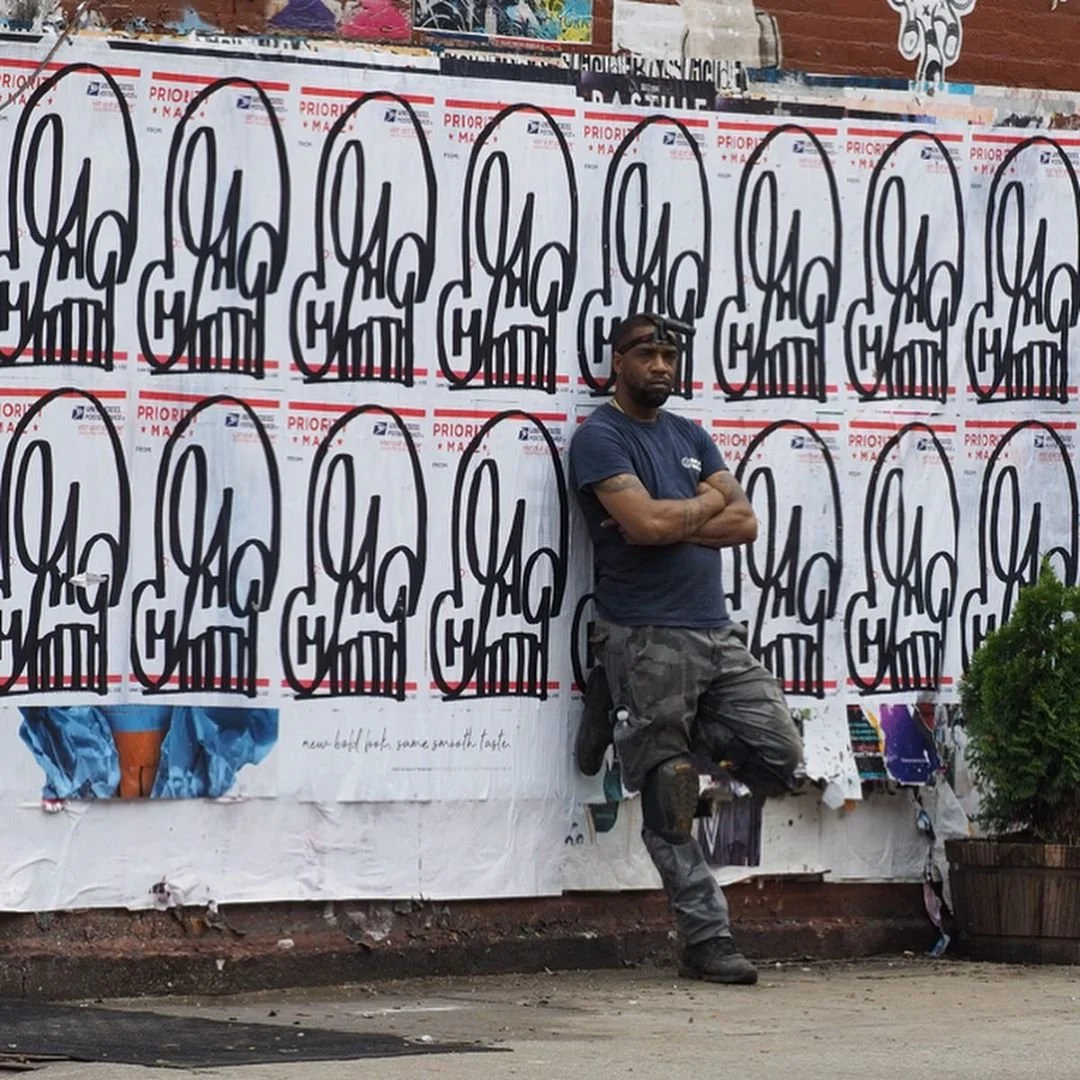
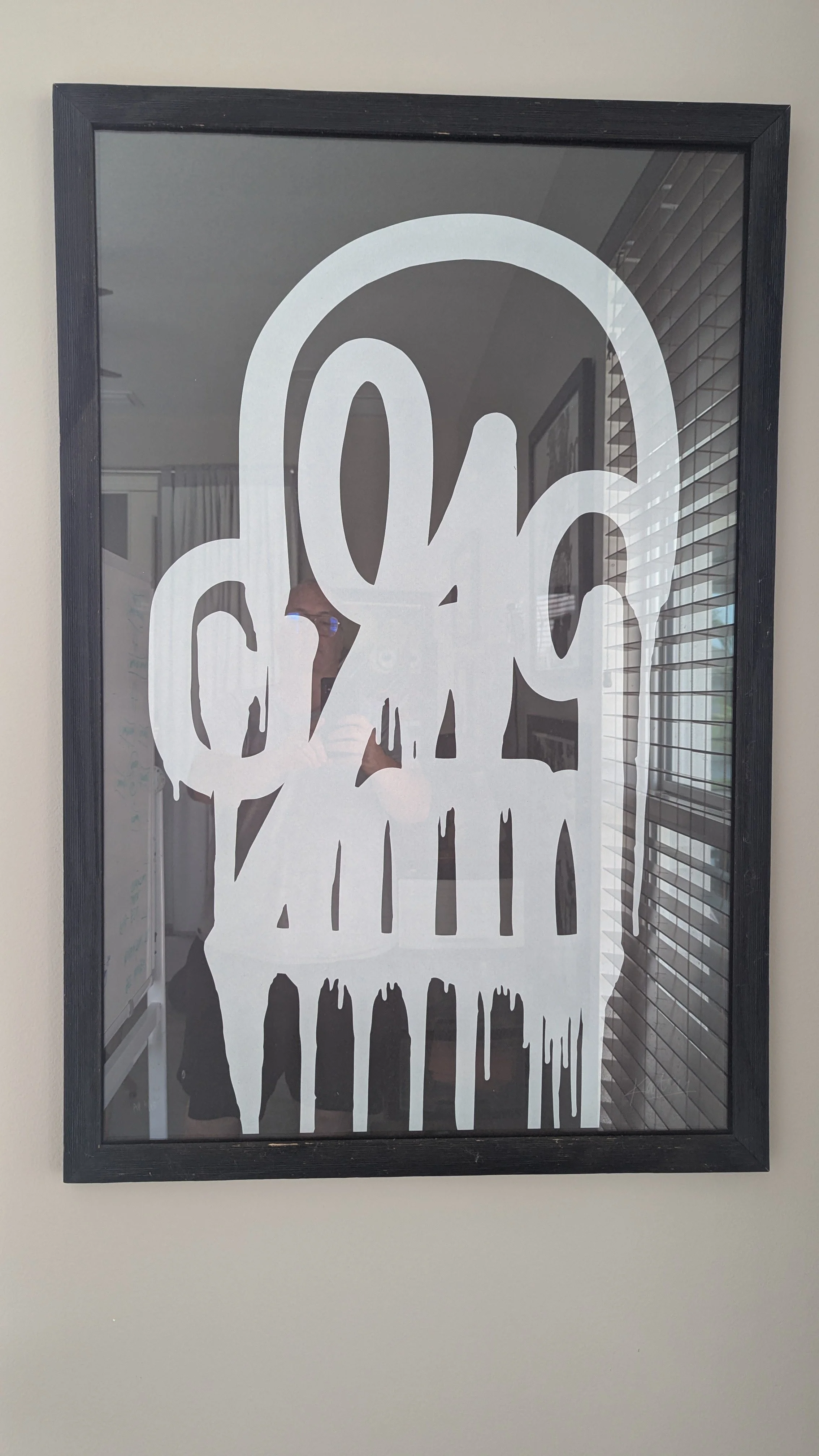
KATSU’s skull looks as if it arrived before anyone could stop it.
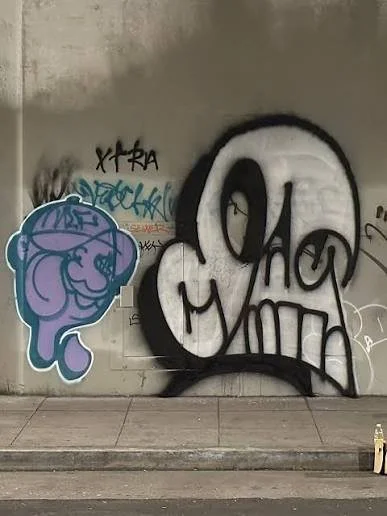
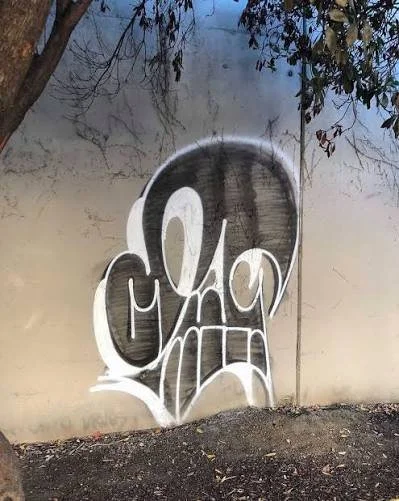
The eyes are hollow. Aerosol hangs around the image like smoke, while a heavy drip pulls the face toward the ground. It is crude, chilling and immediately recognizable.
That is what first caught my attention.






The Encounter
I cannot recall the exact day I discovered KATSU, but I believe it was through 1xRUN around 2012 or 2013. The Detroit-based publisher had become an important online destination for original art and limited print editions, and somewhere in that stream of discoveries I encountered his Timeless Skull.
My first association was Marvel’s Punisher emblem: the same blunt confrontation of a skull reduced to a symbol. But KATSU’s image felt more unstable and more human. It looked as though it had been drawn in one uninterrupted burst of spray paint, with the overspray and drip left visible as evidence of the act.
It also carried a faint echo of Shepard Fairey’s Andre the Giant face. Not because the two images look alike, but because both demonstrate what a repeated face can become. Repetition turns an image into a signal. Place it on enough walls, stickers, objects and screens, and it begins to operate beyond illustration. It becomes presence.
I purchased an artist proof— 6 of 15— of Timeless Skull and then did what collectors often do after one object opens a door: I went looking for everything behind it.
Online, I found the skull repeated across cities, surfaces and scales. It reminded me of KAWS’s early interventions, when he altered outdoor advertisements with a visual language that became unmistakably his. KATSU’s skull did not wait for an invitation from the surface; it took possession of it.
Then the story became stranger— and much more interesting.
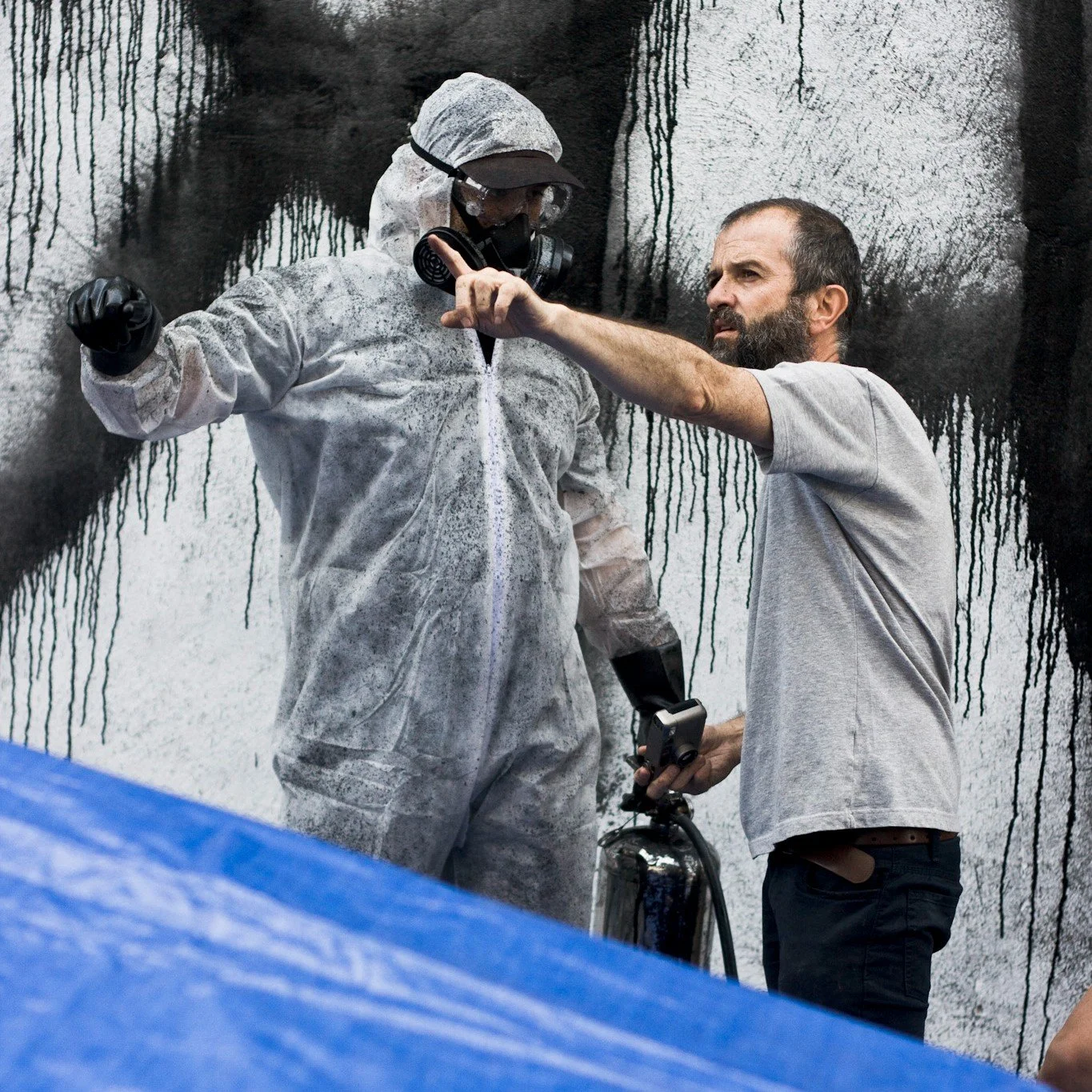
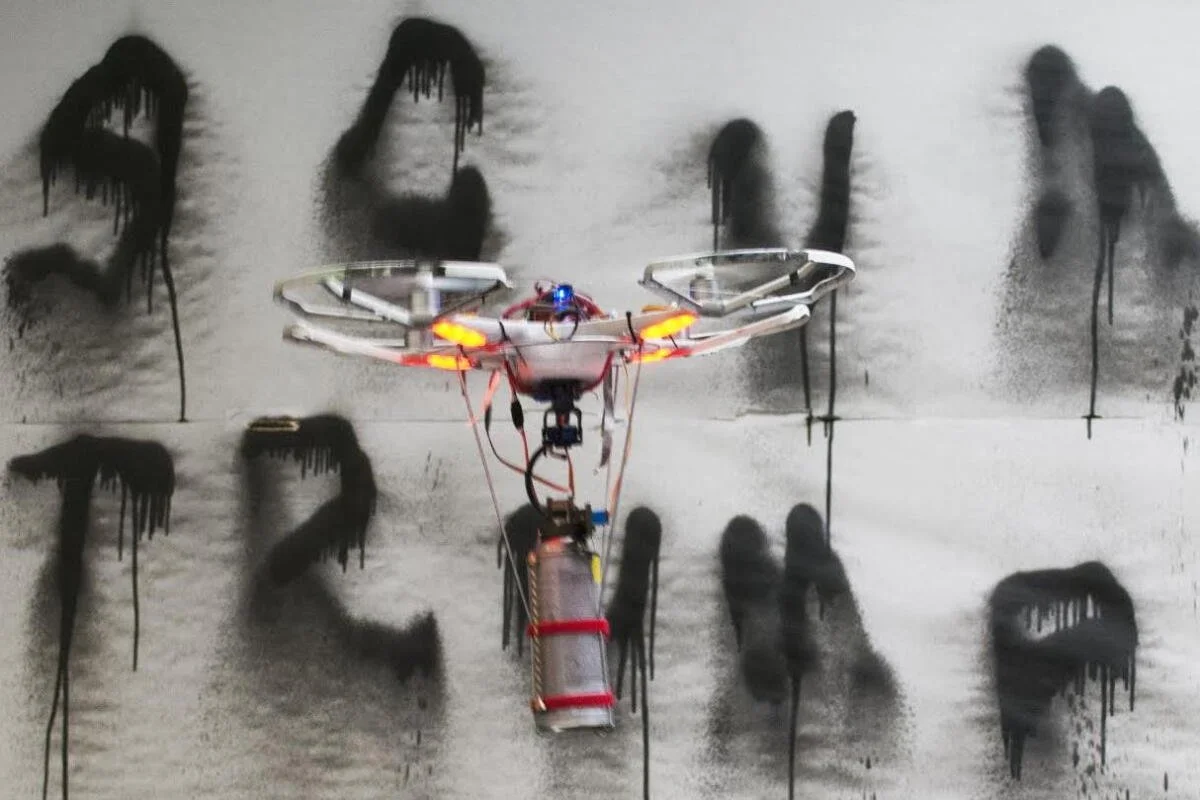
I discovered that KATSU was not simply repeating a successful graphic. He was engineering new ways for a mark to reach places the artist’s body could not. The spray can moved from his hand to modified fire extinguishers, remote controls, software and eventually drones. What began for me as an encounter with one raw image expanded into a larger question: What happens to graffiti when technology becomes the writer?
Who Is KATSU?
KATSU—Katsu Sawada, born in Honolulu in 1982—is a Japanese-American artist whose practice developed at the intersection of graffiti, design, hacking and new media. He earned a BFA in Integrated Design from Parsons School of Design in 2005 and has worked between New York and San Francisco.
He first became known within New York’s graffiti community in the 1990s, but a conventional biography does not fully explain him. KATSU is less interested in settling into one artistic category than in testing the boundaries among several: vandalism and fine art, physical gesture and computer code, anonymity and authorship, public space and commercial culture.
His materials have included spray paint, canvas, sculpture, video, virtual reality, machine learning and games. He was a research fellow with the Free Art and Technology Lab, or F.A.T. Lab, and later worked as a creative technologist on virtual-reality and machine-learning projects. Exhibitions including Remember the Future, Memory Foam, DRONE, DOT and BITS moved those experiments into gallery settings.
Across those formats, the concern remains surprisingly consistent: KATSU takes a technology designed to behave in one way and makes it behave differently.
A drone associated with surveillance or warfare becomes an unruly paintbrush. An artificial-intelligence system designed to classify faces generates unsettling imaginary “criminals.” A fashion collection becomes a moving wall for a graffiti moniker. The impulse is consistent: find the system, enter it and interfere.








What Makes the Work Recognizable?
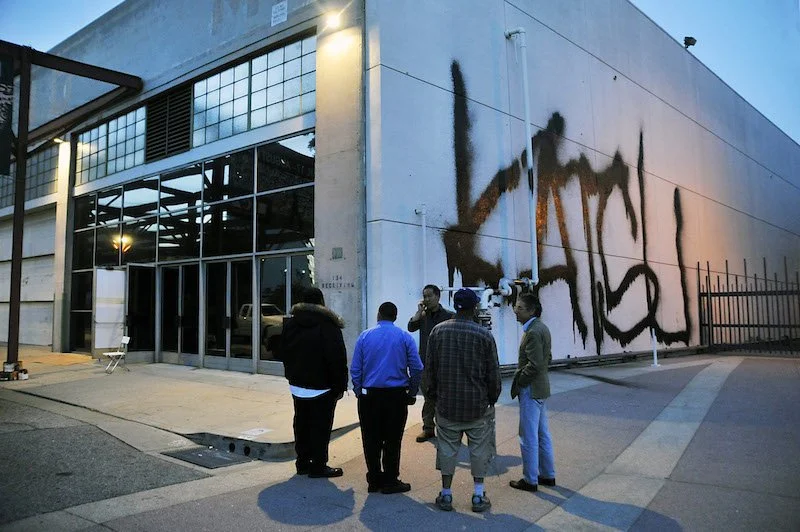
The skull remains KATSU’s clearest signature.
It appears to be made in a single fluid line, yet there is nothing elegant about it in the conventional sense. The line doubles back, changes pressure and releases a cloud of atomized paint. The surrounding mess is not a failure of control. It is part of the identity.
That quality separates KATSU from stencil-driven street art and writers focused on the construction of letters. He is not operating in quite the same lane as COPE2, Ben Eine, RETNA or Stay High 149. The skull sits closer to a primitive emblem—part drawing, part tag and part warning.
Black paint on a white ground may be the purest expression of it. The contrast gives the image the directness of a traffic sign, while the drip prevents it from becoming too designed. Yet KATSU has pushed the moniker through many colors, materials and contexts, from small objects and sneakers to prints, garments and enormous walls.
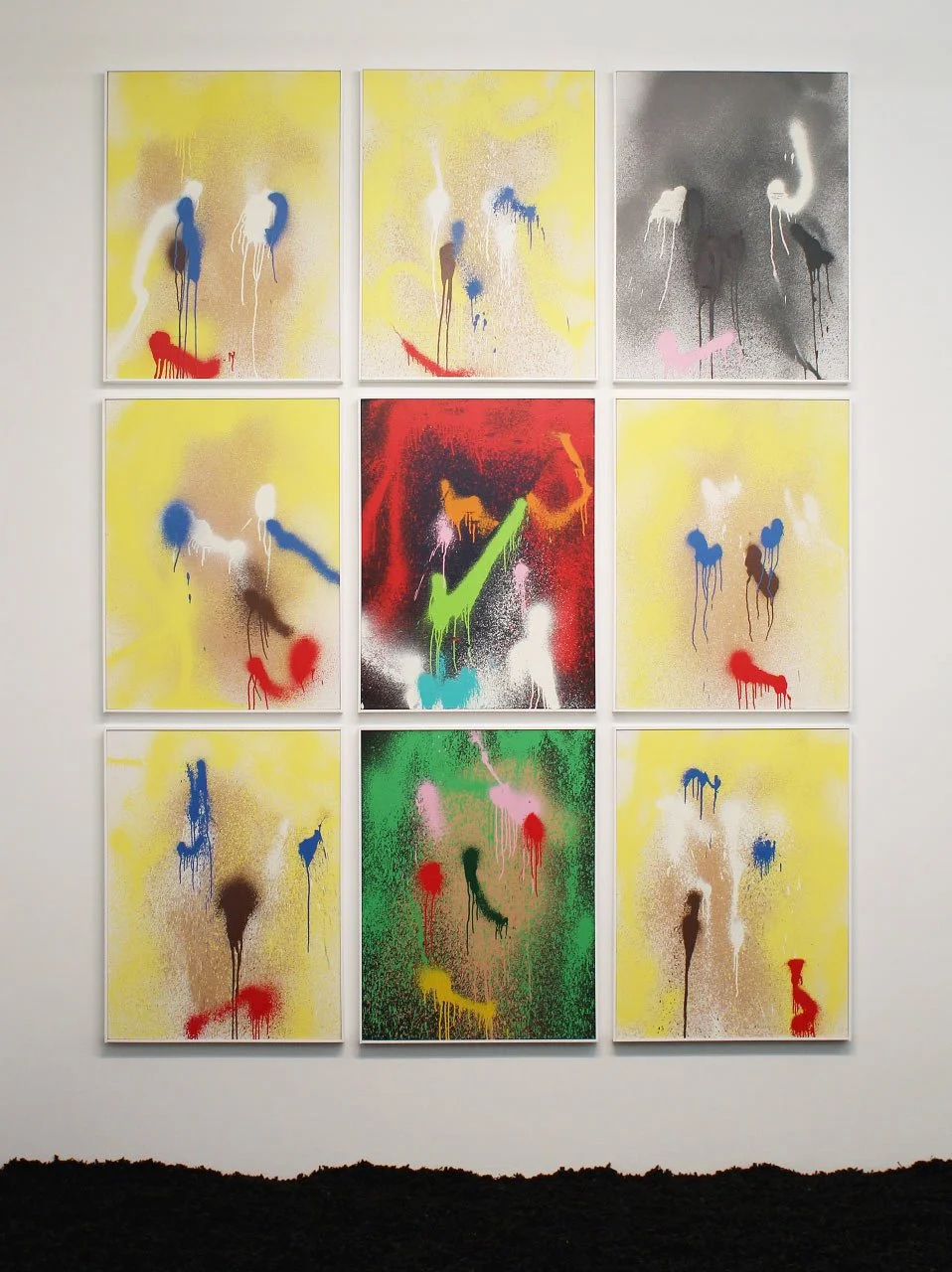
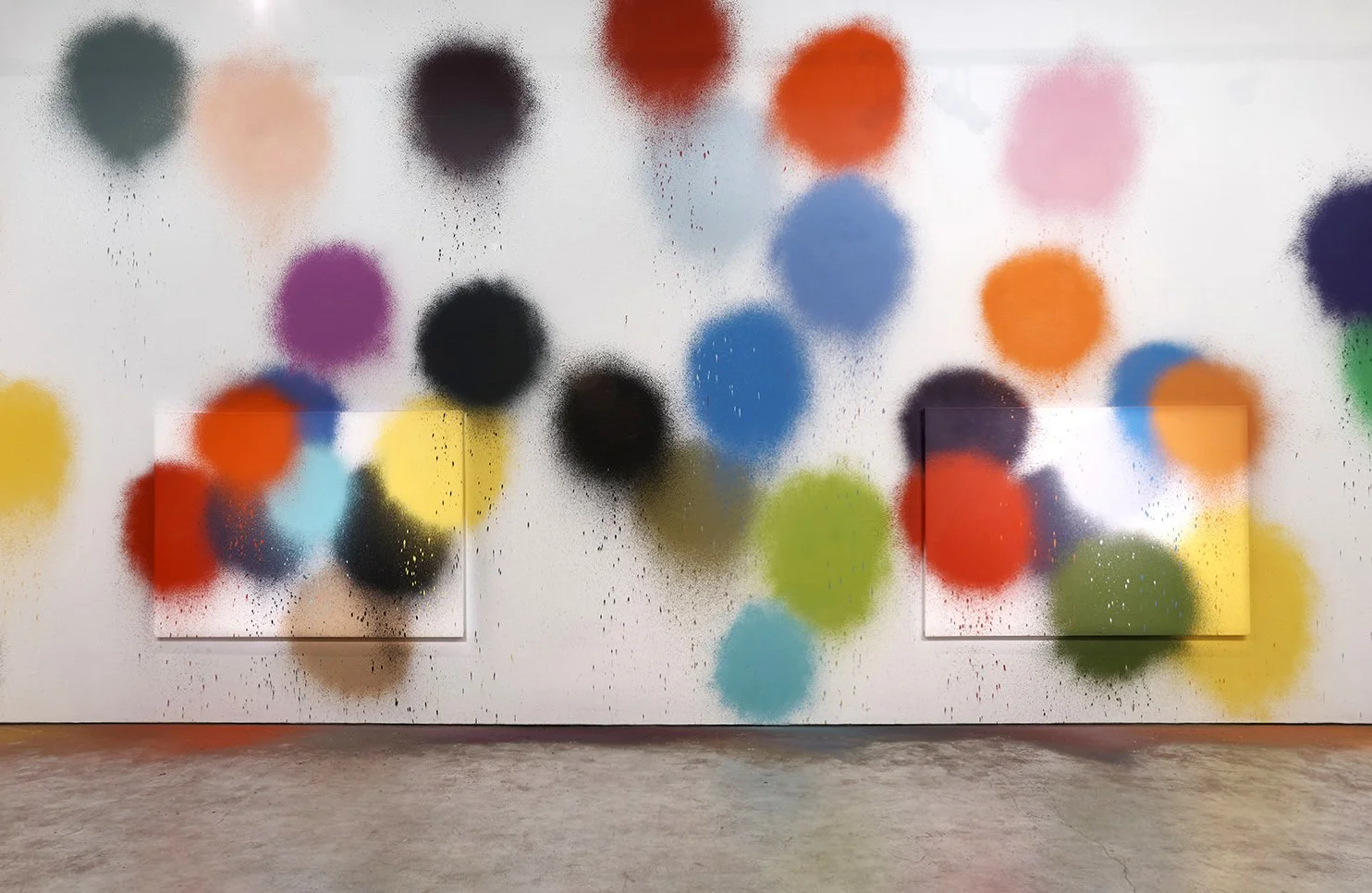
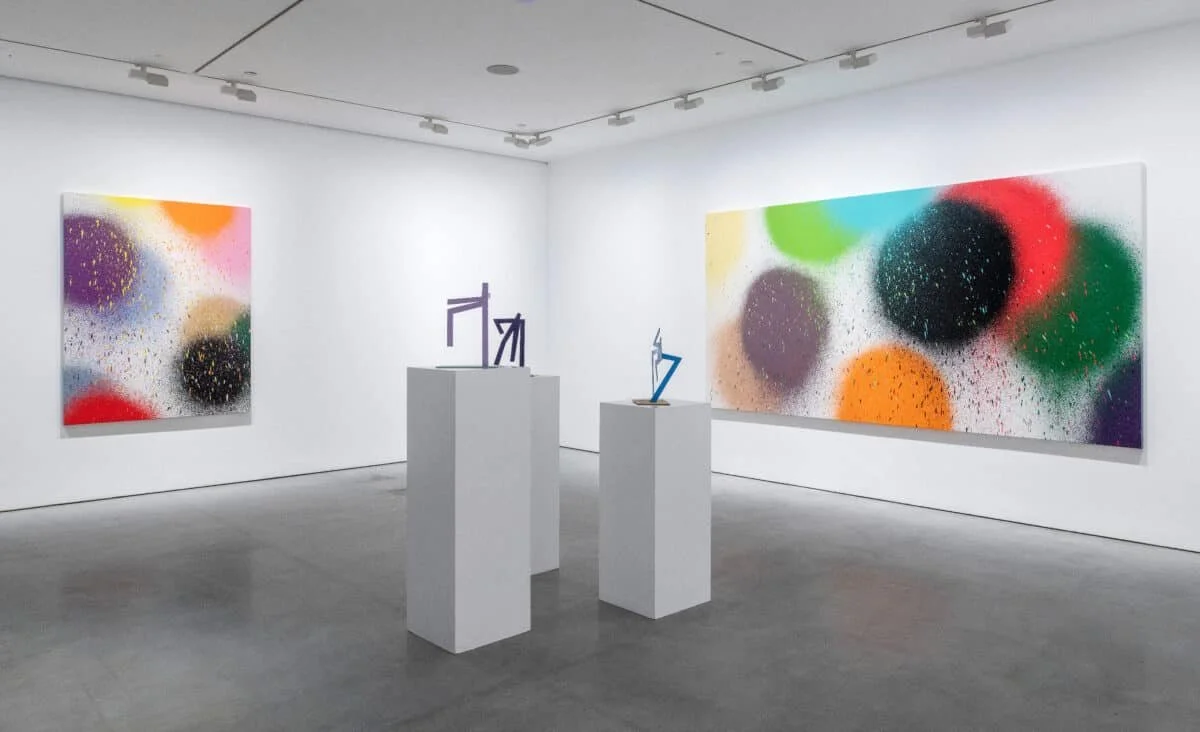
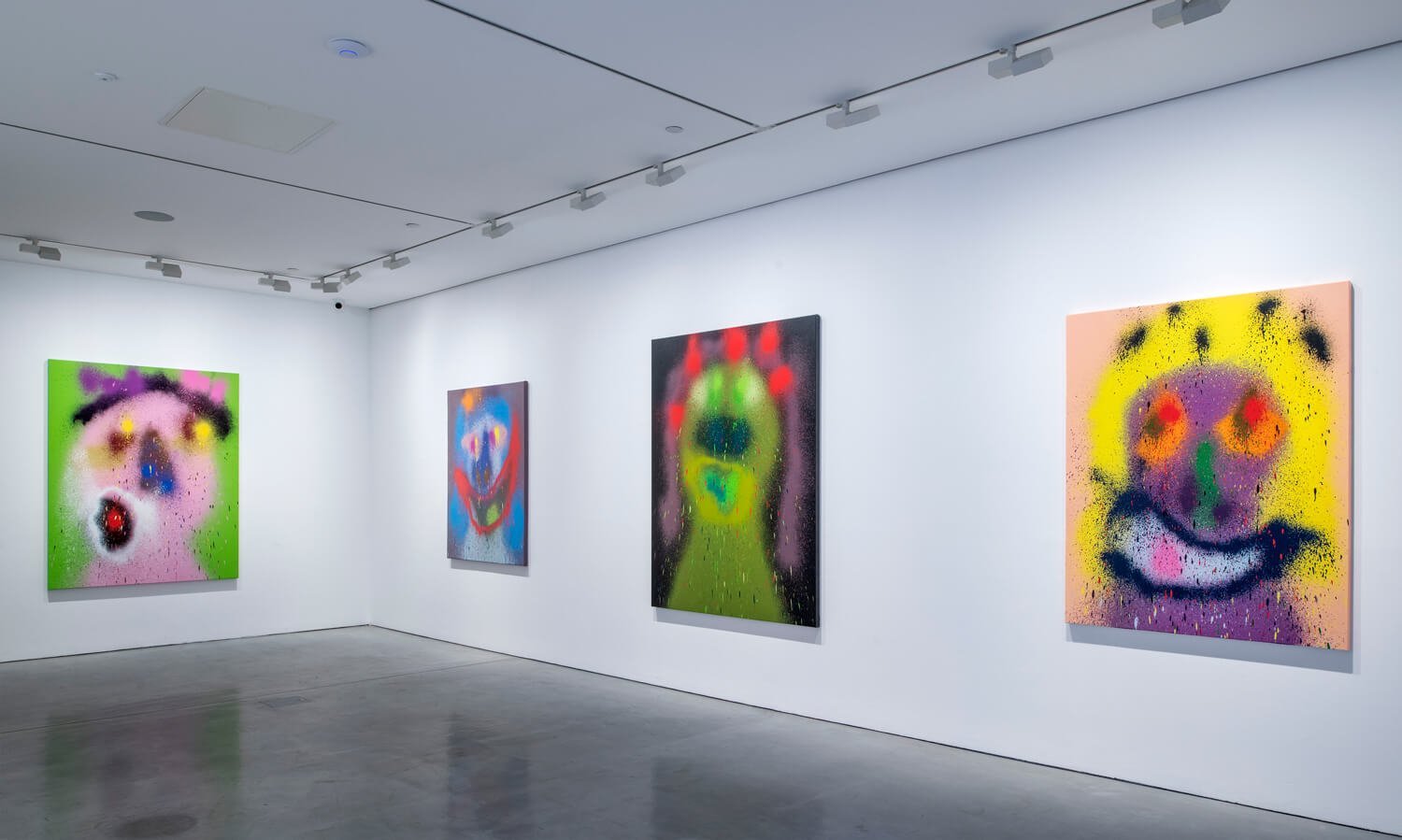
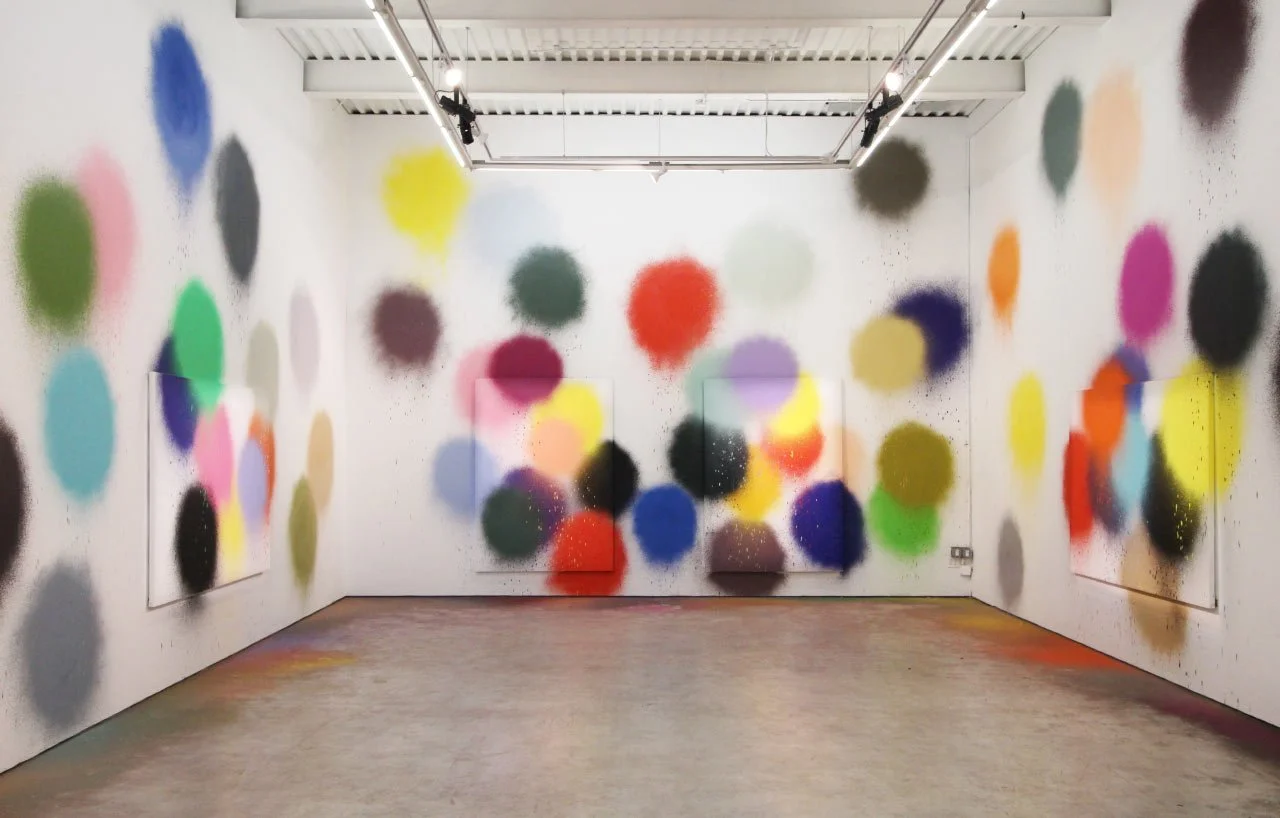
The drone paintings introduce a second visual language: dots, flowers, smiley faces and abstract clouds of enamel. They can look childlike or accidentally beautiful. Paint gathers unevenly, edges dissolve and marks slip from the artist’s intention as the machine corrects its own flight.
That loss of precision is essential. A KAT SU drone painting records a negotiation among artist, tool, gravity, air and code. The finished surface is evidence of control being shared—and sometimes refused.
What Is Happening Beneath the Surface?
KATSU’s work is built on tension: human versus machine, control versus accident, permission versus intrusion.
The street is where polished systems meet evidence that they cannot completely control. One unauthorized mark can change the meaning of a perfect billboard, pristine storefront or carefully managed brand image.
That is part of what I see in KATSU’s work. No matter how refined the world around us appears, there is always raw energy underneath it—pressure, contradiction and the possibility of interruption.
His use of technology makes that idea sharper. We treat machines as extensions of human control; KATSU asks what happens when the extension becomes a collaborator. Who is the author when a semi-autonomous drone determines part of the gesture? Is a mark still graffiti if the writer never touches the wall? Does automation make art less human, or does its unpredictability expose what polished technology tries to hide?
His AI portraits push the same questions into more disturbing territory. Trained on old mug shots, the system produces faces that never existed but still appear to carry the visual burden of suspicion. The work is not merely a display of technical novelty. It asks what our machines learn from biased human archives— and what authority we surrender when those machines begin to classify us.
Beneath the mischief is a serious examination of authorship, surveillance, identity and power.

Three Proof Points
1. The Skull
The single-line skull proves that KATSU understands the fundamental power of graffiti: a mark must survive repetition without losing its force. It works as a street tag, print, sticker and fashion graphic because it is simple enough to travel and strange enough to remain his.
2. The Painting Drone
KATSU helped pioneer drone painting as a serious process, first sharing control with the aircraft and later programming machines to execute repeated marks. In 2015, he used a modified drone to spray across a Calvin Klein billboard in New York, collapsing graffiti, advertising, surveillance and spectacle into one action.
The later paintings—flowers, smiley faces and monumental dots—moved that experiment into galleries without removing its central instability. The work still asks whether the machine is merely carrying out an instruction or participating in the act.
3. OffKat
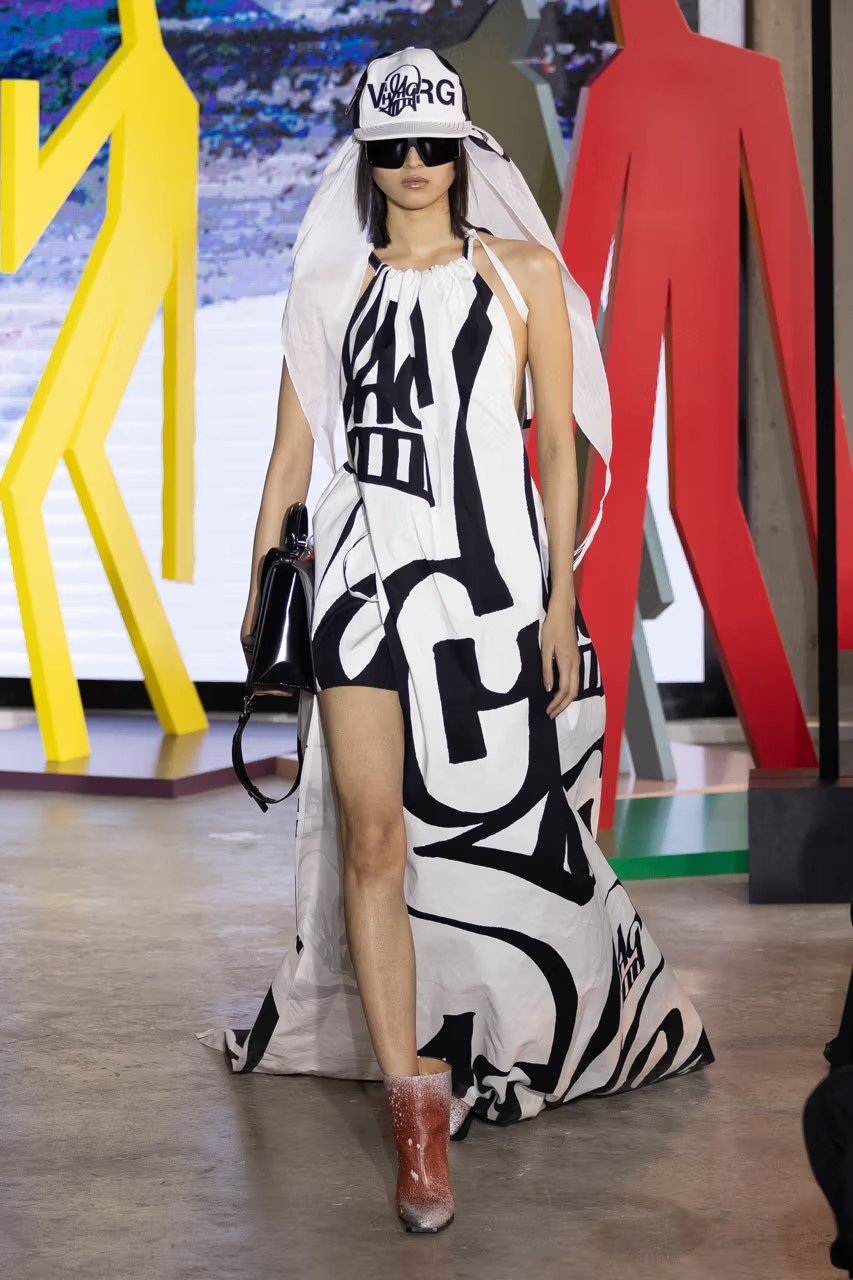
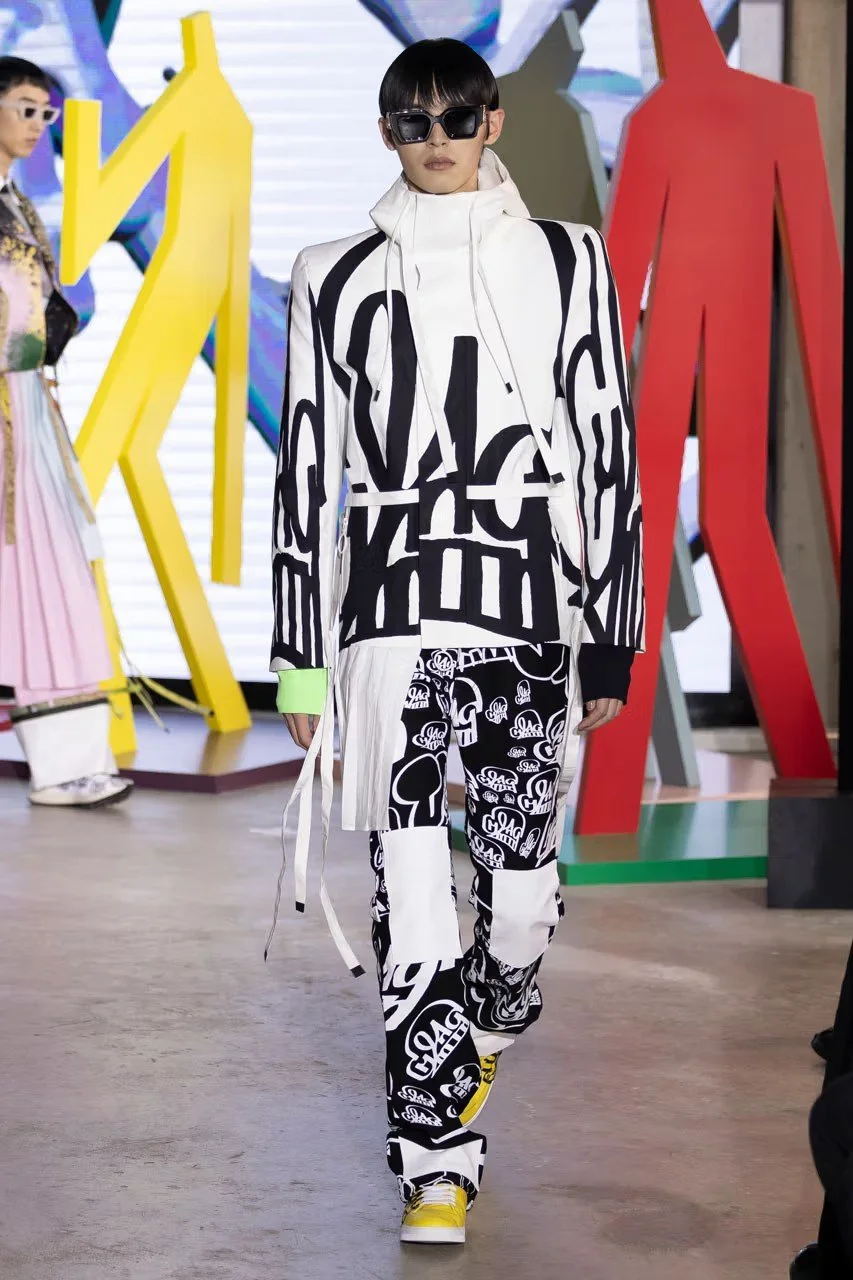
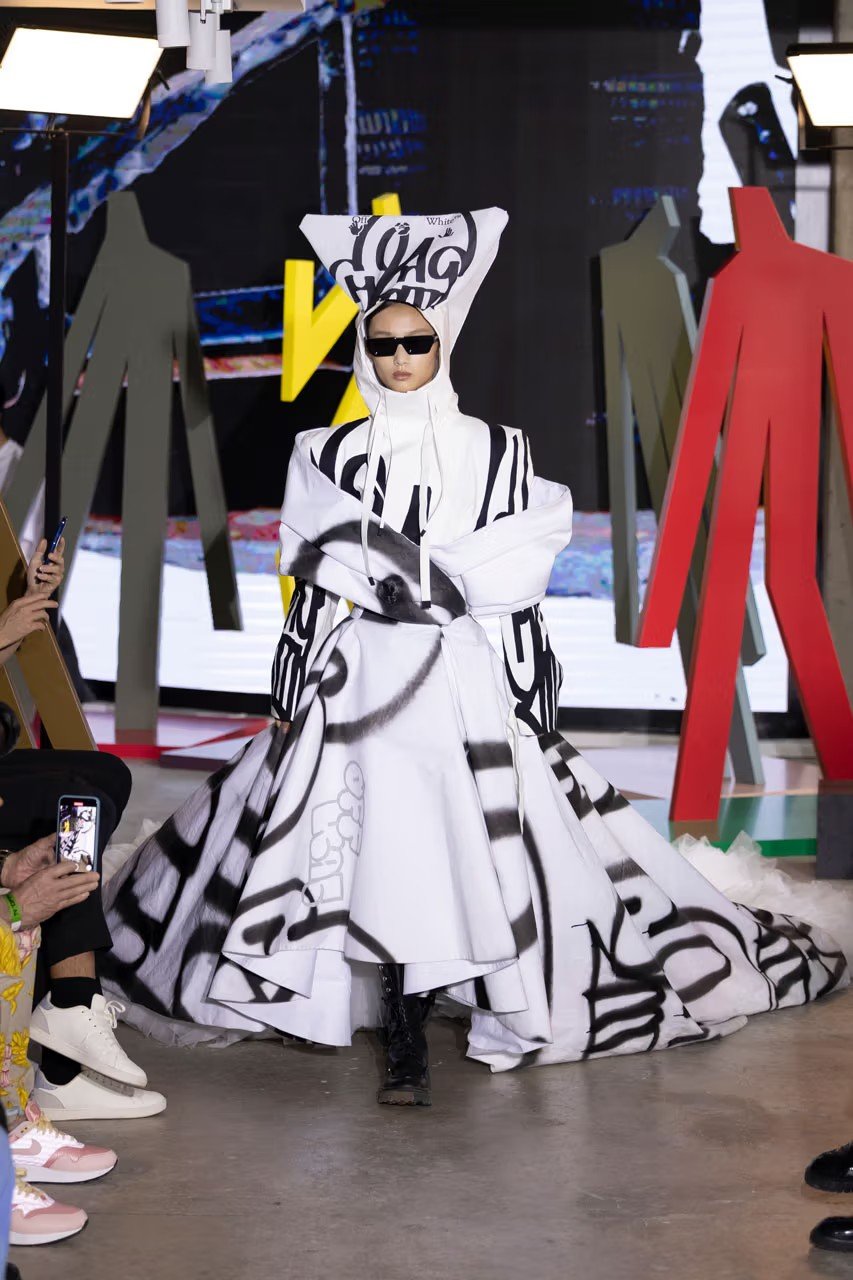
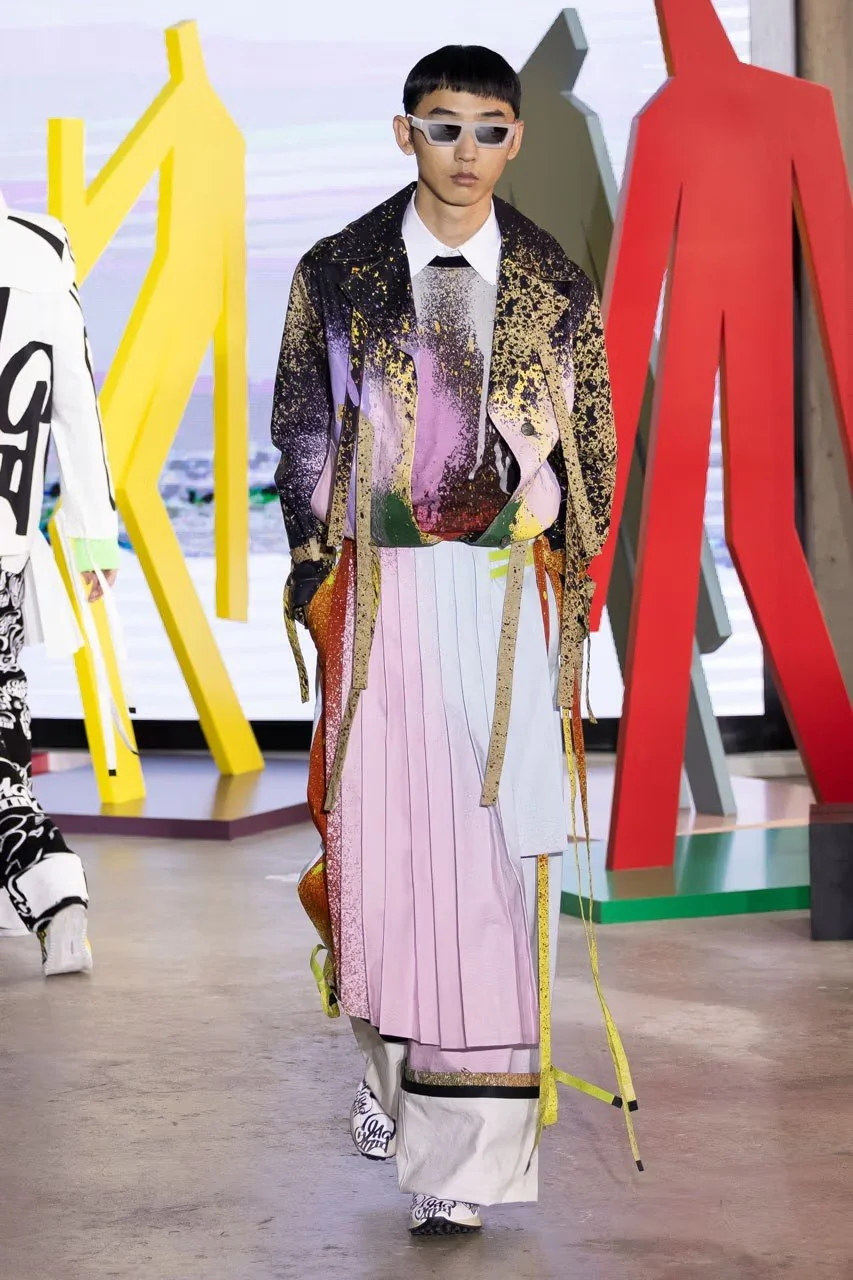
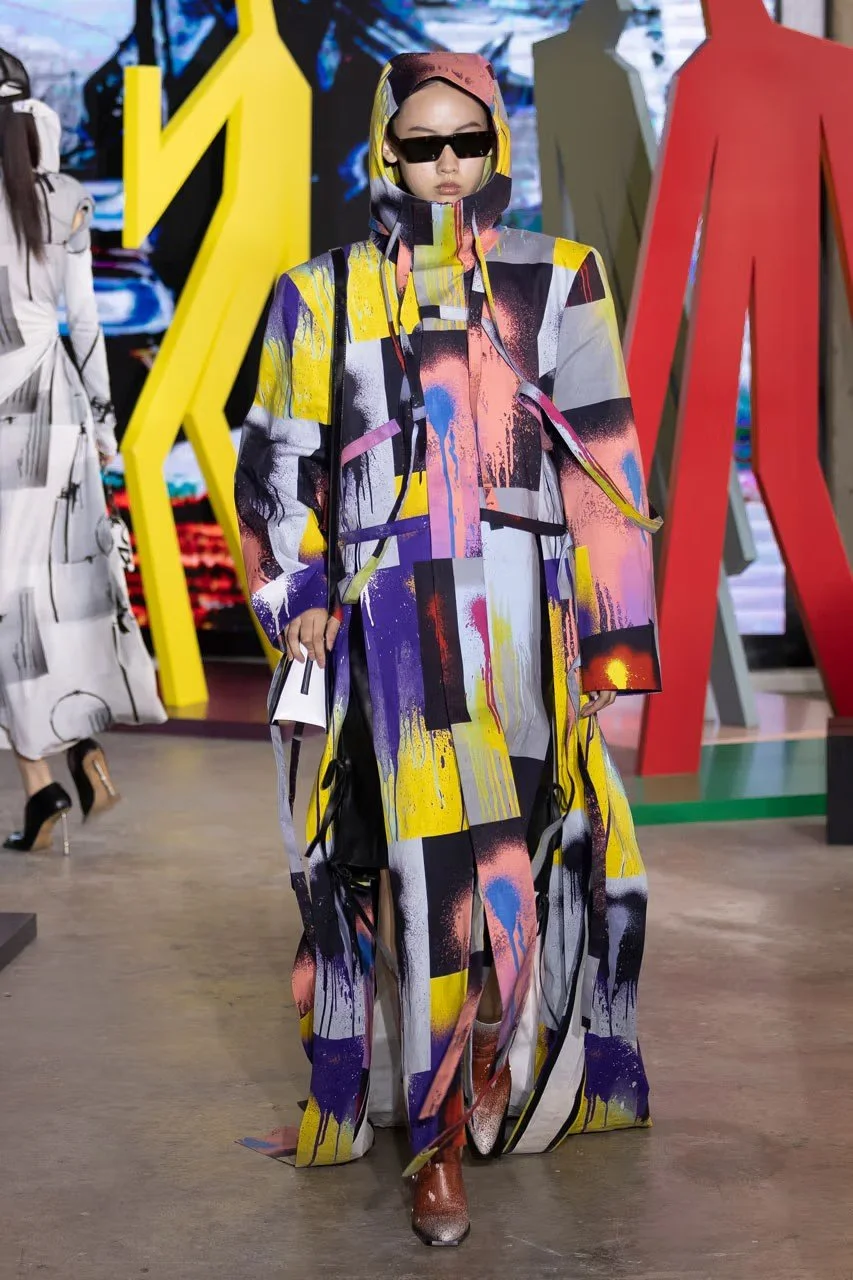
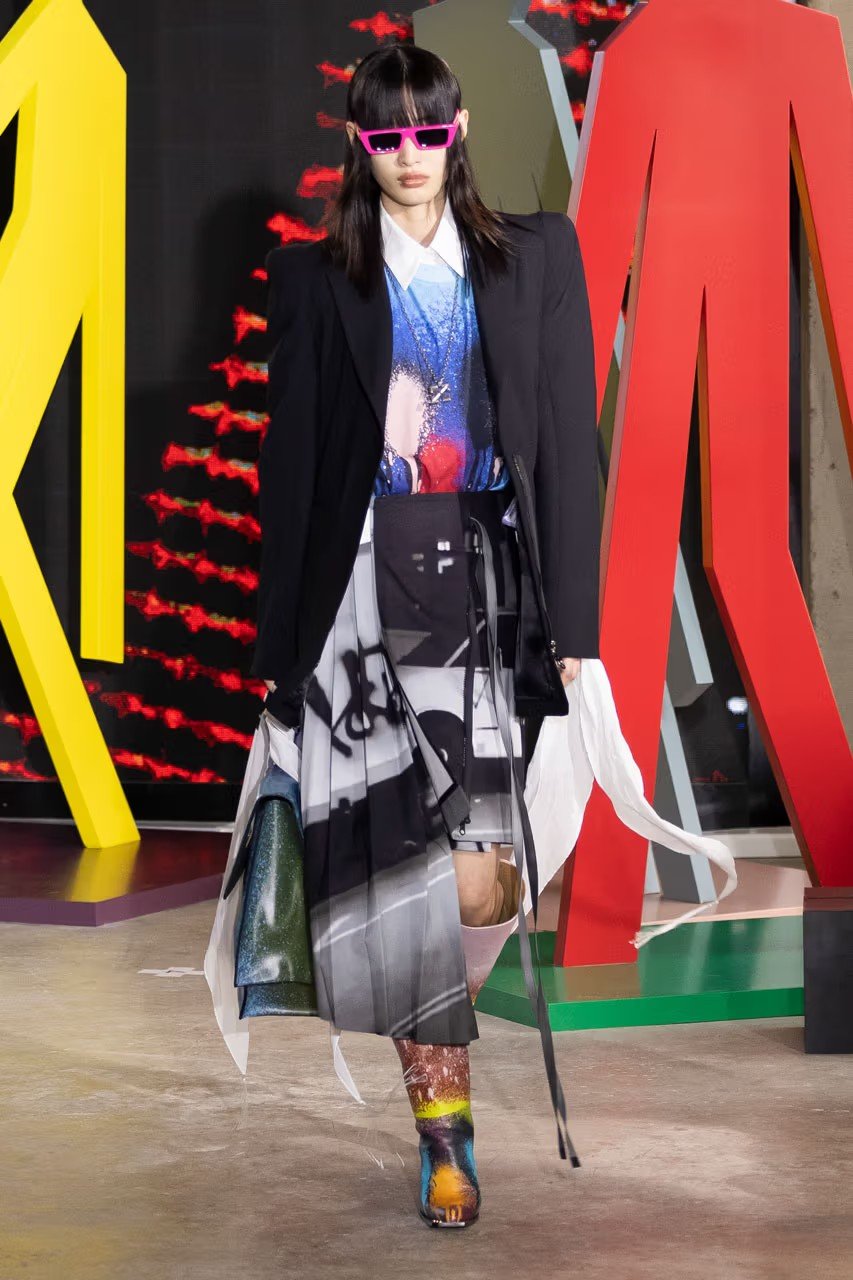
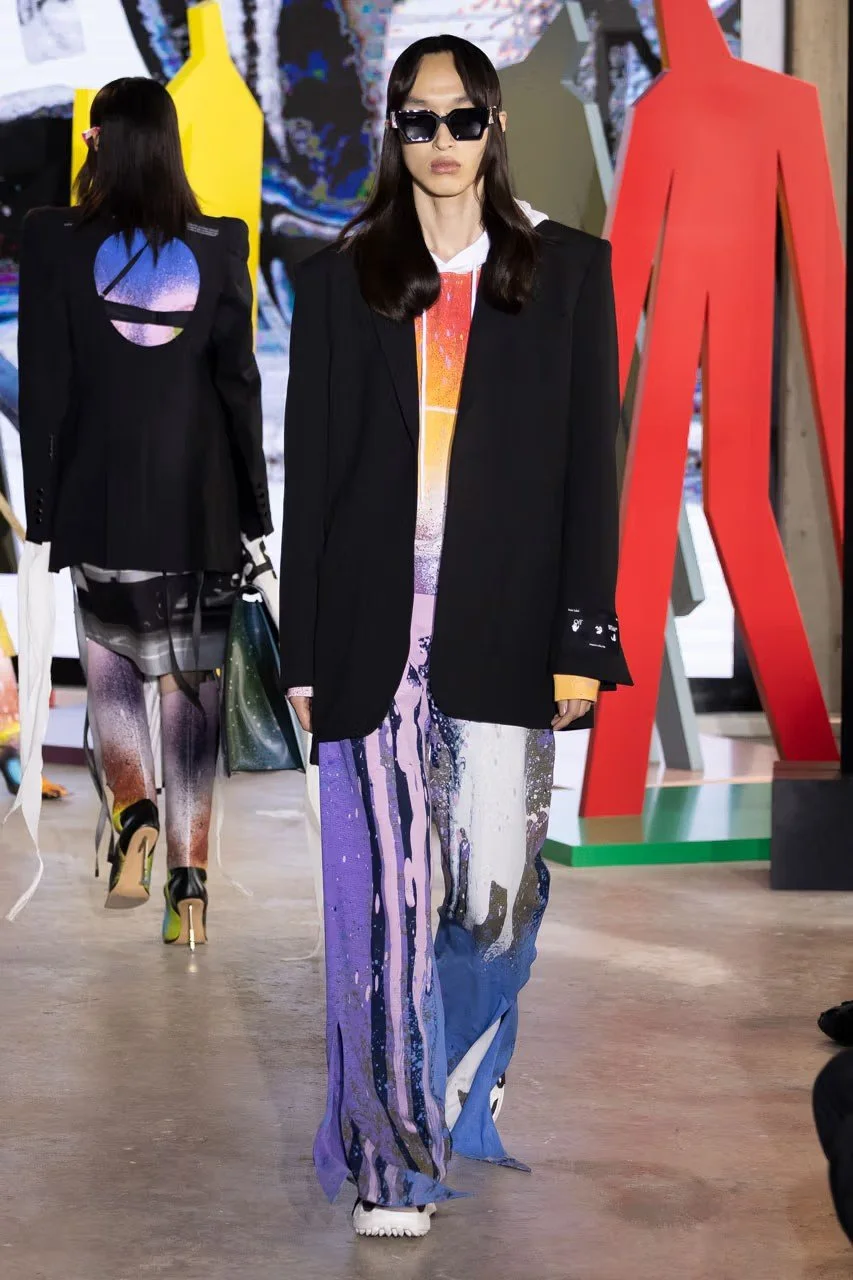
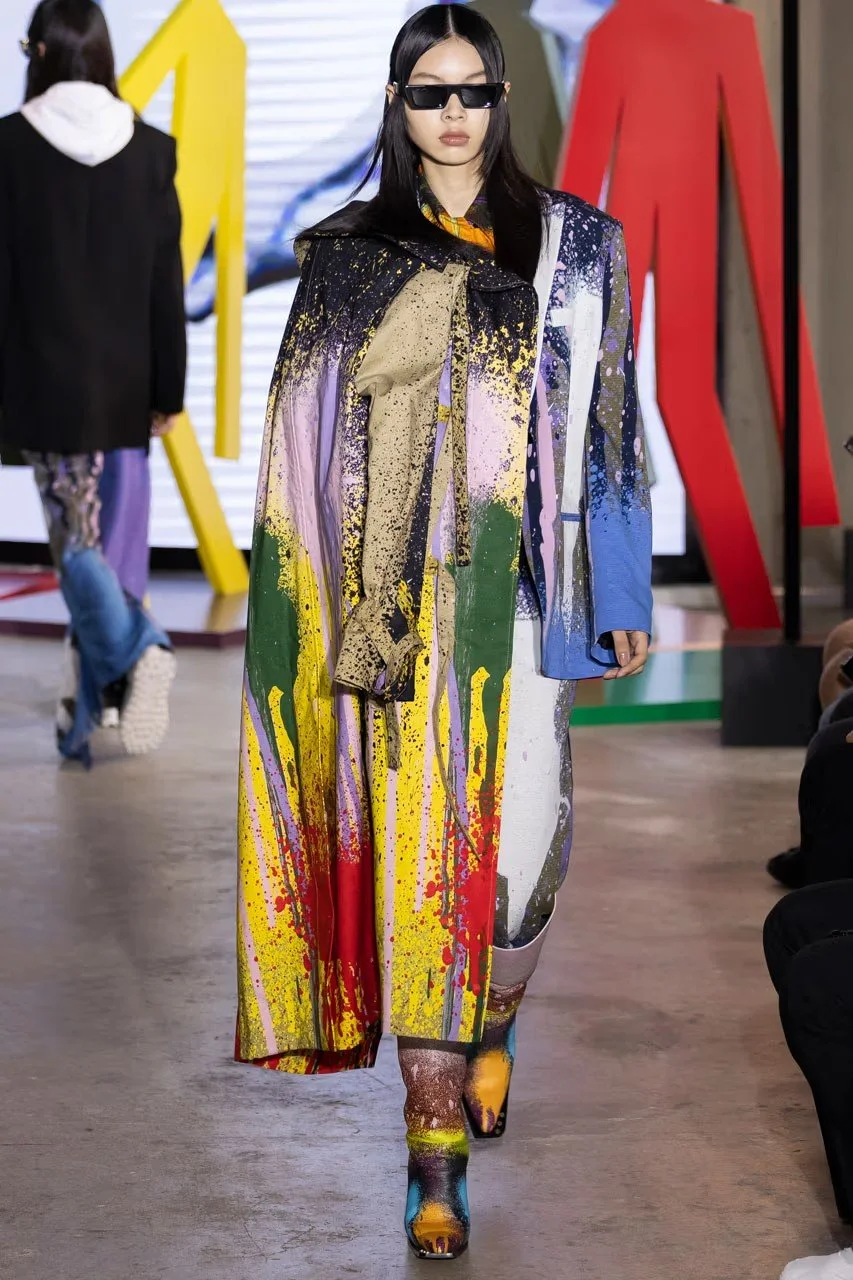
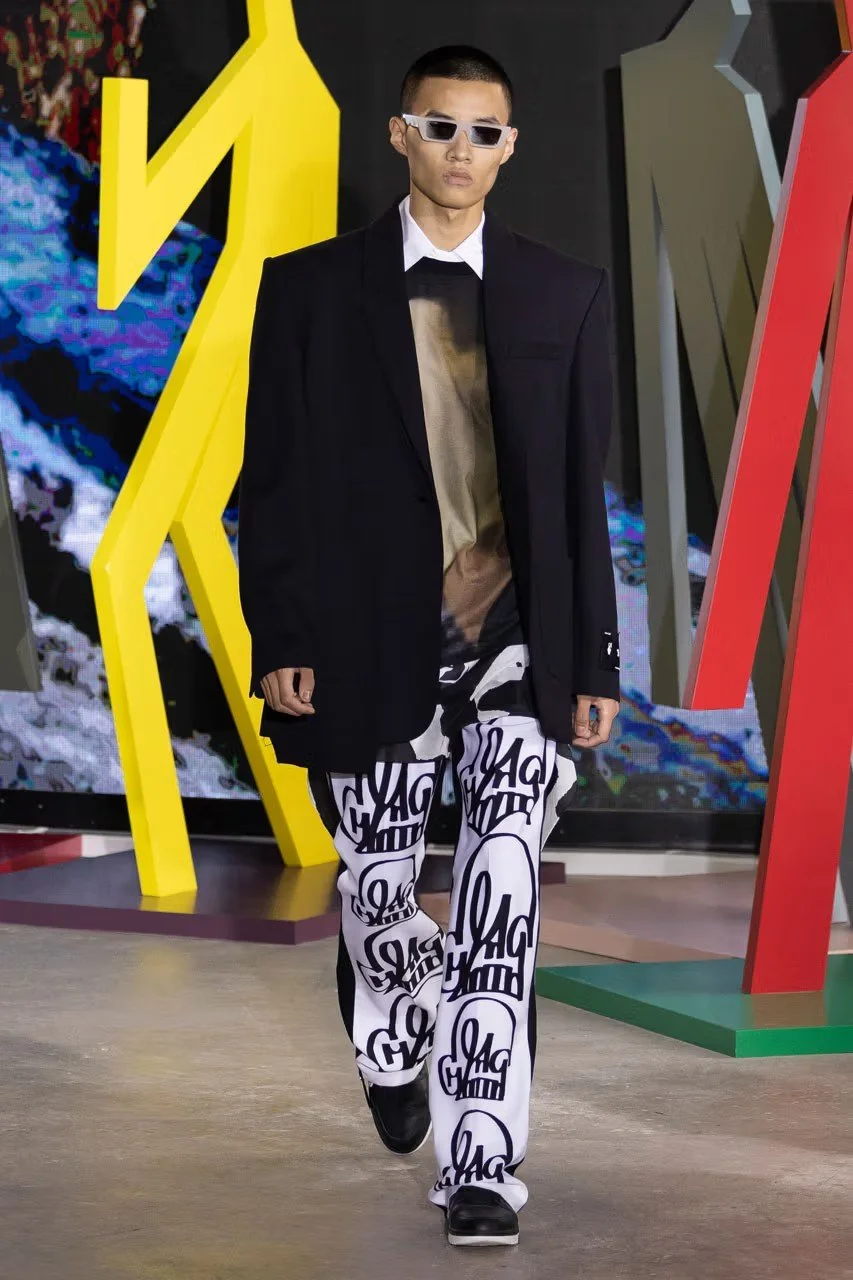
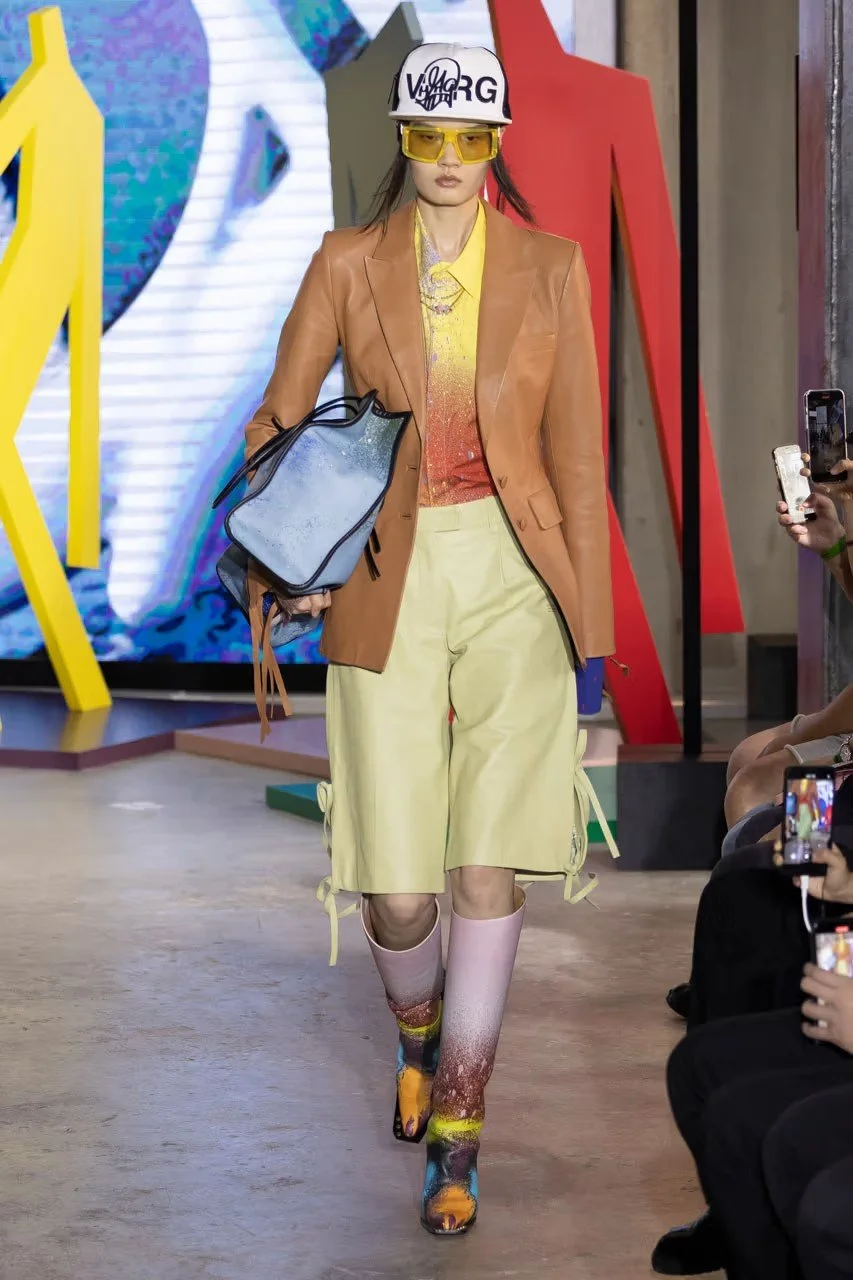
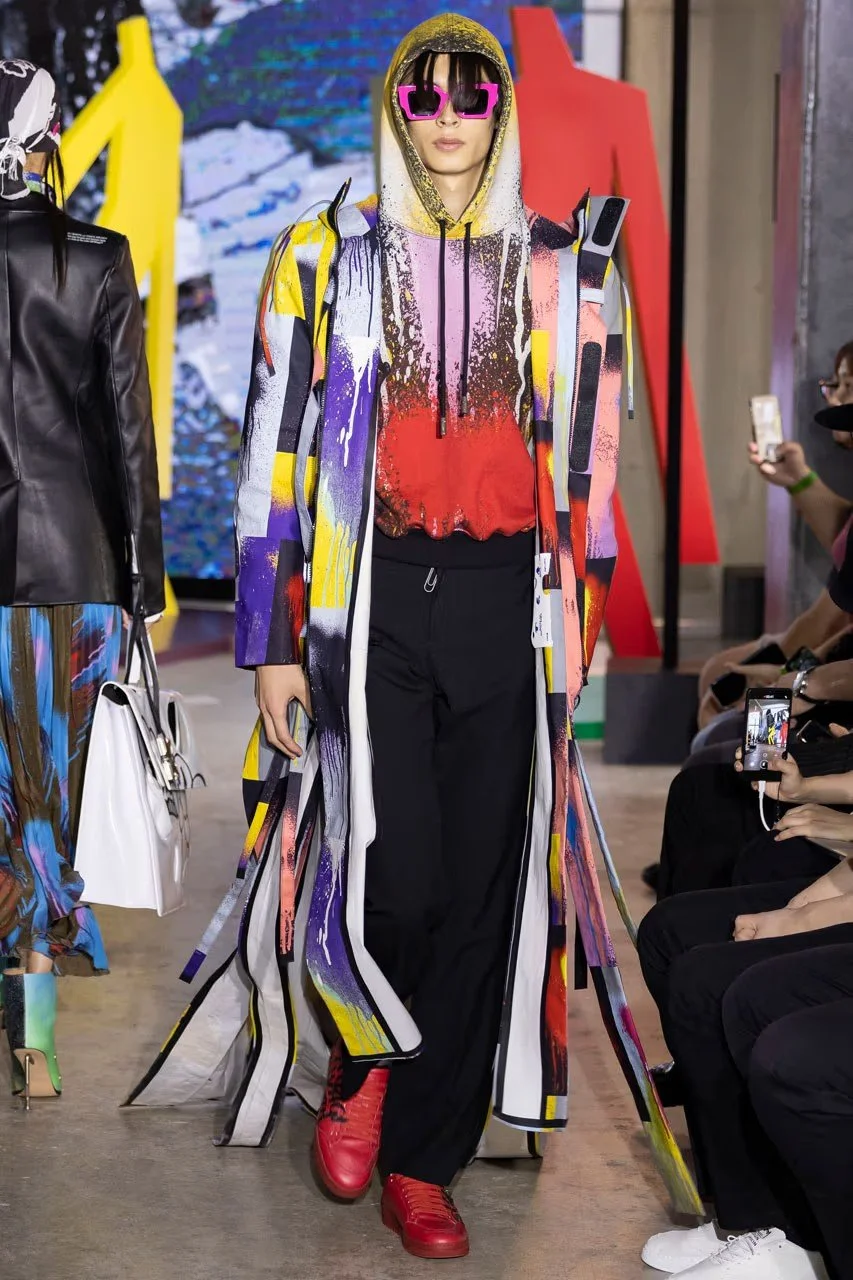
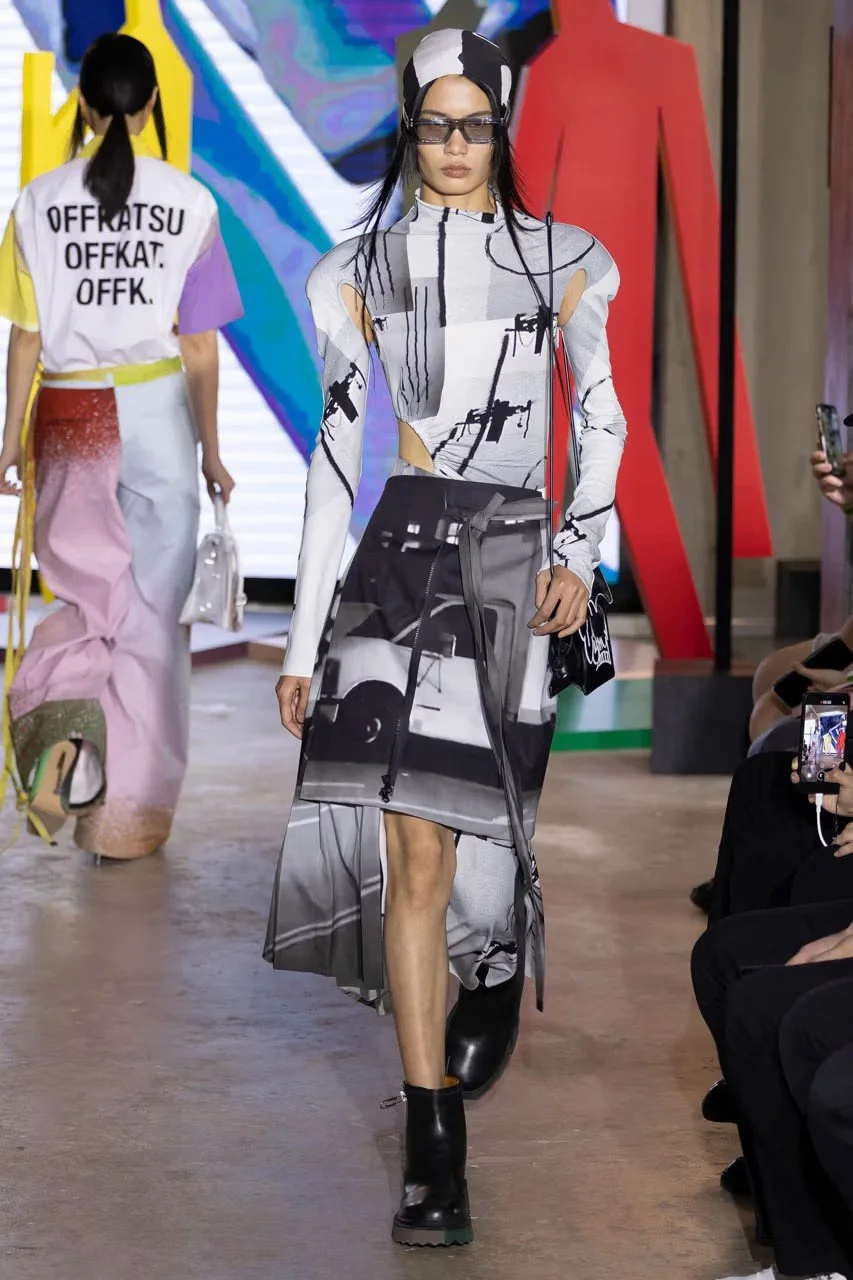
In 2021, Virgil Abloh and KATSU launched OffKat, a collaboration that extended across womenswear, menswear, accessories, installations and a mobile game. KATSU’s skull and drone-paint imagery appeared on tailored clothing, dresses, bags, footwear and more.
This was not simply an artist graphic dropped onto a T-shirt. Abloh recognized that KATSU’s practice connected a subversive tradition to a technological future. His concise description—“He crosses lines, and dissolves them”—gets to the heart of the work.
Neither participant had to abandon his own language. Off-White gave KATSU new surfaces and movement; KATSU gave the collection the risk of something that refused to stay contained.
What Initially Drew Me In?
The raw intensity drew me in first. The unapologetic intrusion kept me looking.
There is something in KATSU’s surface that makes me think of Jean-Michel Basquiat and Futura 2000 more than Banksy: not a stylistic imitation, but a shared willingness to let energy remain visible. The work can be deliberate without appearing over-managed. The spray is controlled, yet it always leaves a mess.
The skull’s eyes and teeth hooked me immediately. Learning that the form could be created as one continuous line made it even more impressive. What looked primitive revealed discipline. The speed was not carelessness; it was fluency.
Then the drones changed my understanding of the artist. KATSU had developed an icon strong enough to repeat forever, but he did not allow that success to trap him. He kept looking for another tool, another system and another surface to challenge.
The Collector’s Pick
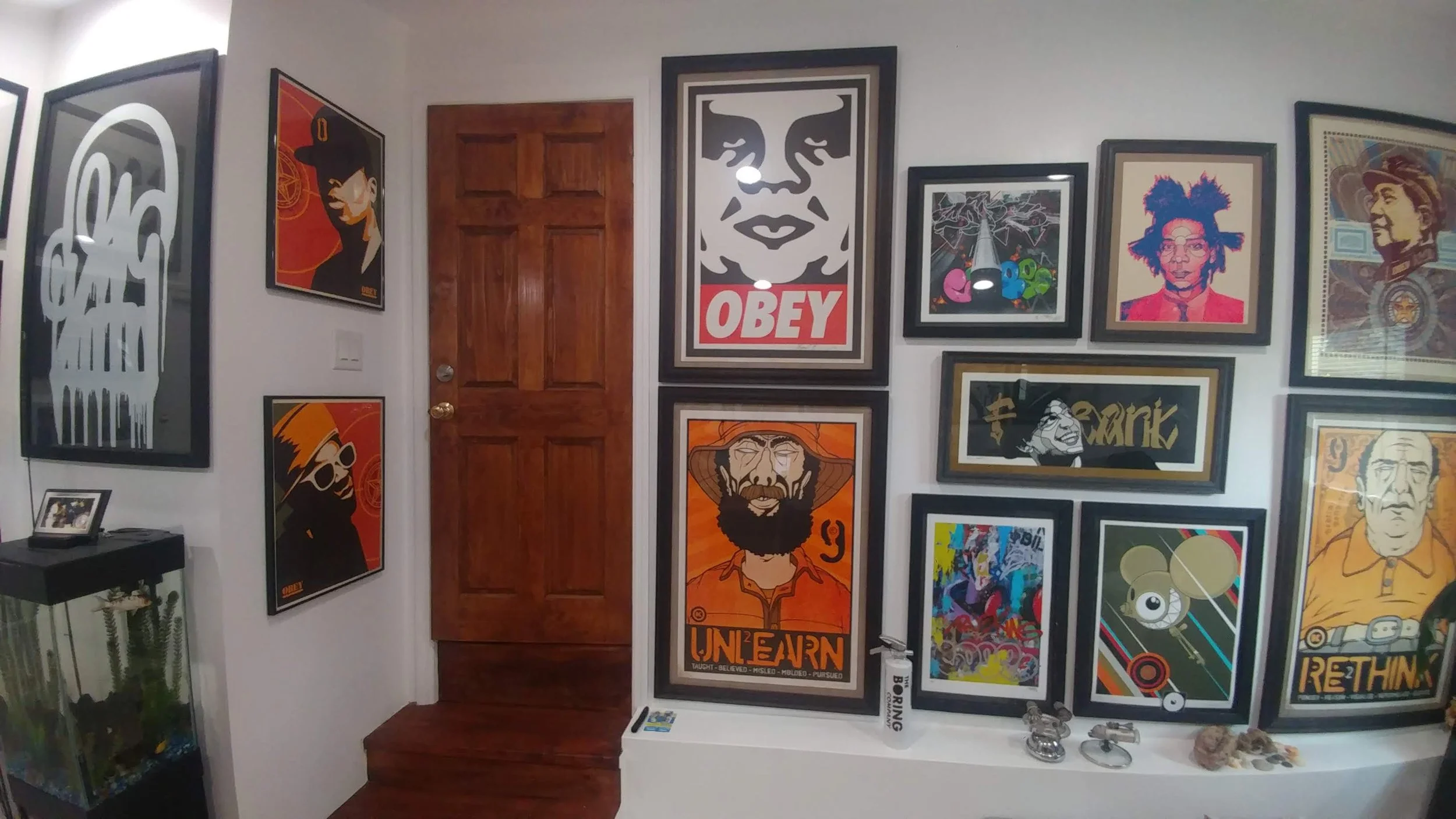
My artist proof of Timeless Skull hangs in my office, where it greets nearly every visitor.
Sometimes it reminds me of Shepard Fairey’s Andre the Giant image: one face becoming a persistent cultural signal. At other times I think of Harvey Ball’s yellow smiley face, created in 1963 and separated from its origin by endless reproduction. Both reveal the difficulty of making an image simple enough to travel yet specific enough to remain unforgettable.
KATSU’s skull does that in a darker register.
I value the piece because it holds the entire practice in one image. It contains the hand, the speed, the aerosol, the rebellion and the flaw. It also marks my own point of entry. Before the drones, AI portraits and fashion collaboration came into view, there was the skull—and the feeling that I needed to know who had made it.
Why KATSU Matters Now
KATSU explored authorship and automation before generative AI became an everyday cultural argument. He turned consumer drones into painting tools before most people had decided what drones would mean in civilian life. He understood that new technology would destabilize our ideas about who creates, who controls and who receives credit.
That makes the work feel especially relevant now.
For artists, KATSU offers permission to define a medium rather than inherit one. Paint can travel through code. Graffiti can exist as a wall, game, garment, video or autonomous action. For brands and collaborators, OffKat offers another lesson: the strongest partnership does not sand away the artist’s disruptive qualities. It gives those qualities a meaningful new context.
For collectors, the work asks us to look beyond the finish. Beauty can reside in overspray, drift and failed precision. The machine’s mistake may be the most revealing mark on the canvas.
I first saw a skull that looked as if it had been sprayed before anyone could stop it. Years later, that image still greets me in my office. But now I understand it as more than a moniker.
It is a declaration of method: move quickly, leave evidence and never let the tool behave exactly as expected.
KATSU made technology misbehave. In the process, he expanded what a writer’s mark could be.
Look Closer
Explore KATSU’s work and exhibition history through The Hole, Ever Gold Projects and Beyond the Streets. See a Timeless Skull edition through 1xRUN.
Collector’s question: Which version of KATSU’s practice would you want to live with—the single-line skull, a drone painting or one of his AI-generated works—and why?