
WK Interact: The Artist Who Made New York Move
Long before I knew his name, WK Interact changed the way I looked at New York— and the way I understood what art could be.
WK Interact makes still images feel incapable of standing still.
His figures run, lunge, fall, fight and fly. Their bodies stretch into black streaks, as though the city has pulled them forward faster than the human eye can follow. Even when they are pasted onto brick or painted across concrete, they appear to be escaping the surface.
That contradiction is what first stopped me: a fixed image that felt alive.
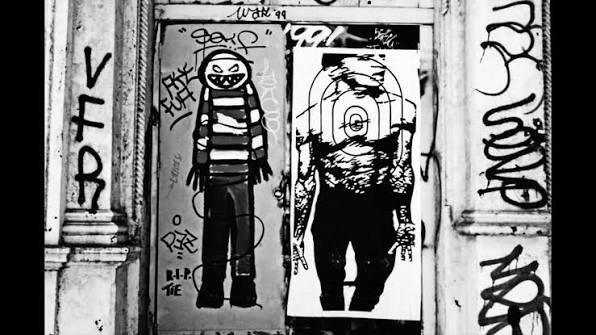
I did not encounter WK’s work in a museum, a gallery or an art-history book. I found it on the multi-angled walls of an old gas station and garage at Lafayette and Prince Streets in downtown Manhattan. I had moved from Orangeburg, New York, to attend the Fashion Institute of Technology, where I studied advertising and marketing. I was young and hardly sophisticated about art.
But I knew when something had power.
The imagery was stark— almost entirely black and white— and unlike anything else around it. One figure seemed to propel itself across one plane of the building and into the next. The artist had not treated the garage as a blank rectangle. He had considered its corners, interruptions, surfaces and sightlines. The entire structure became part of the composition.
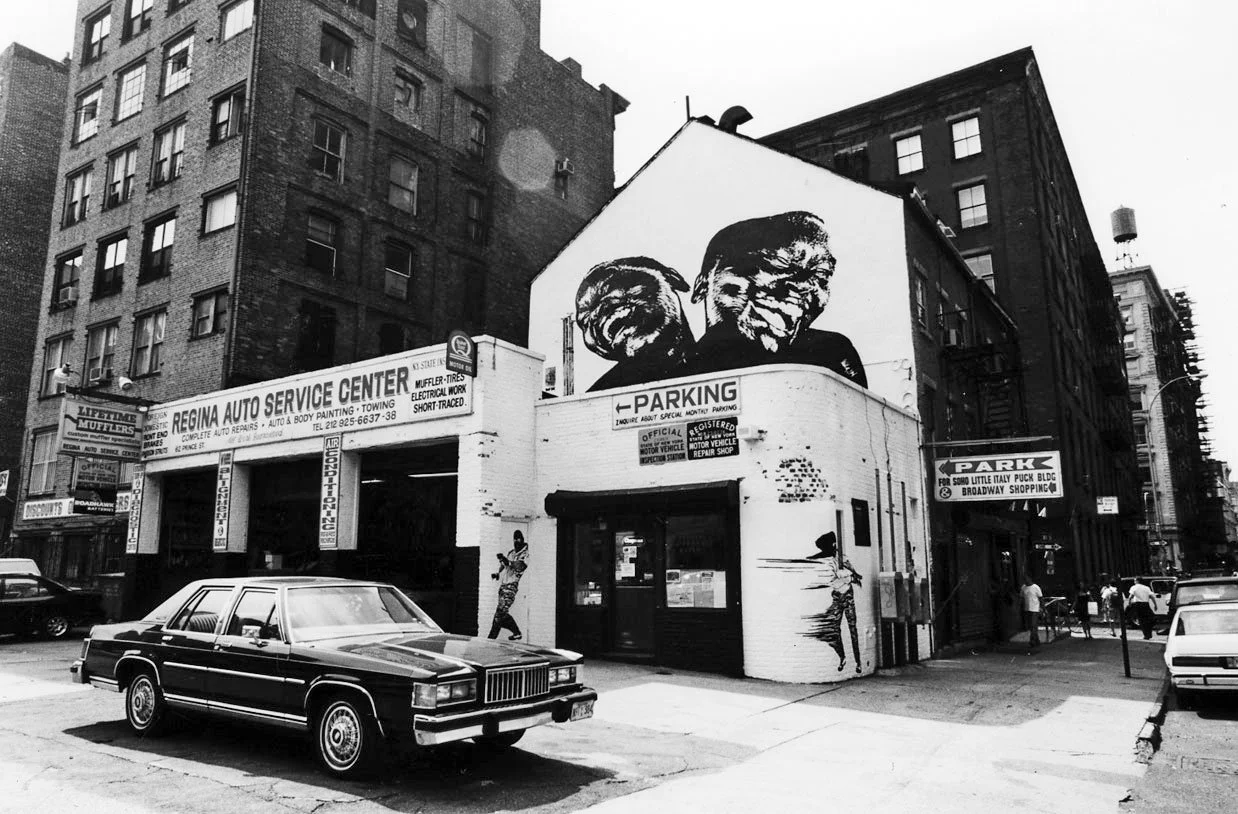
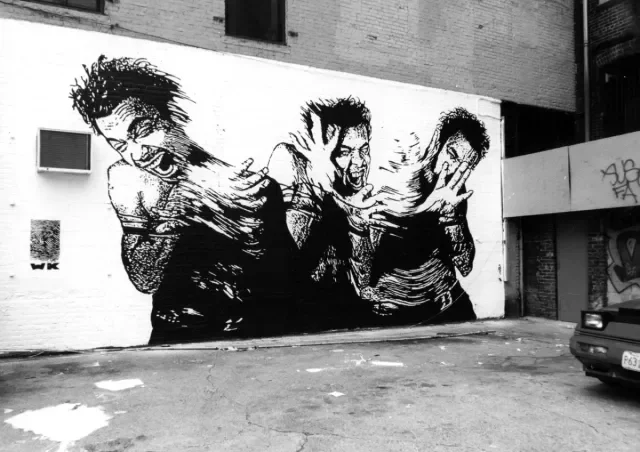
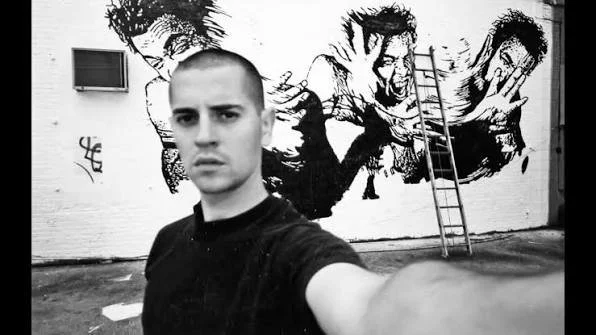
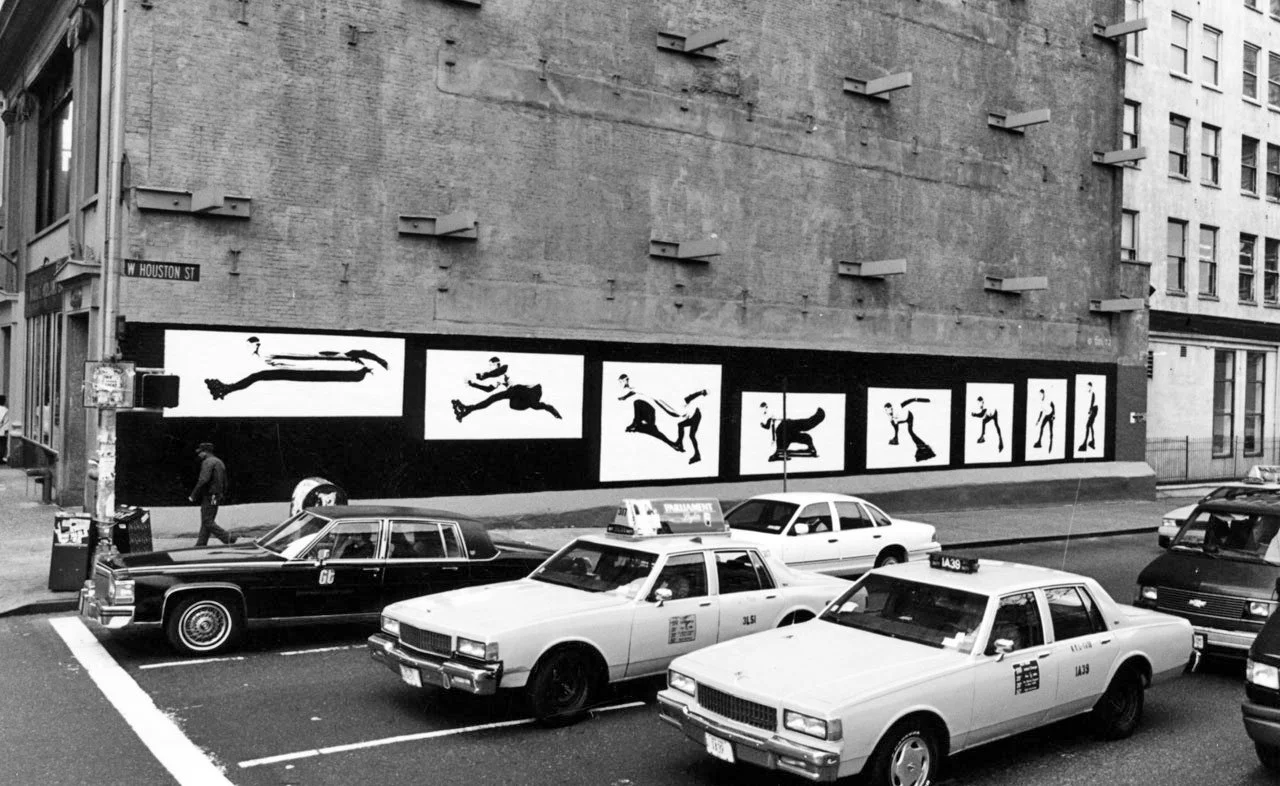
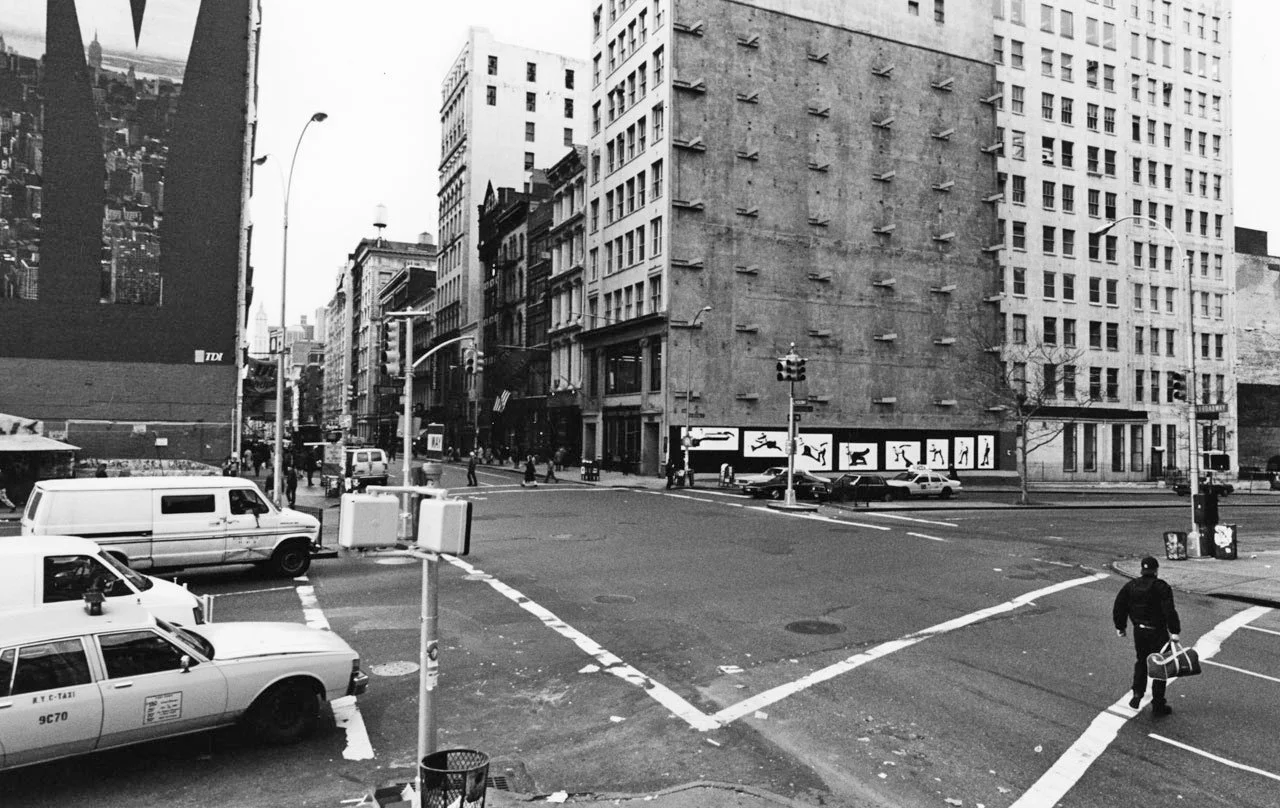
I kept returning to it. Or, more accurately, New York kept returning me to it.
The installation remained for months, yet somehow seemed fresh each time I passed. Then details changed. Images were revised. The wall felt less like a finished object than a living scene. Soon I began noticing related work elsewhere in Lower Manhattan, including a prominent piece near Broadway and Houston, across from the Angelika Film Center.
I still did not know the artist’s name.
I only knew that the city’s walls had begun speaking to me.
Who Is WK Interact?
WK Interact was born in 1969 in Caen, France, and has lived and worked in New York since the early 1990s. He worked day jobs painting city walls and used the materials, architecture and relentless energy around him to develop a visual language of his own.
The human body in motion became his central subject. Runners, fighters, dancers, soldiers and anonymous urban figures appear suspended at the instant when restraint gives way to action.
His adopted name explains the philosophy behind the work. “Interact” is not decorative branding; it describes the method. WK frequently finds the location before choosing the image. He studies the architecture, the neighborhood and the likely movement of passersby, then creates a figure capable of entering into a relationship with that specific place.
The wall is not merely where the artwork goes. The wall helps determine what the artwork becomes.
A WK figure on a clean gallery wall may be compelling. Wrapped around a scarred doorway, charging across a garage or broken by old brick, it becomes something else: an event.
What Makes the Work Recognizable?
You can often identify a WK Interact piece before you find the signature.
First, there is the black and white. When WK was starting out, he saved leftover monochrome paint from his day jobs and used it in his own work. What began partly as necessity became identity. The palette captured New York as he experienced it: hard and soft, cold and warm, light and shadow, threat and possibility.
Then there is the distortion.
WK developed a process that involves moving, twisting and stretching an original drawing or photograph while it is being photocopied. The machine does not simply reproduce the source; his physical intervention drags it through time. Faces smear. Limbs elongate. Clothing dissolves into speed lines. One body can appear to contain several consecutive moments.
He may then enlarge the altered image in relation to a building and paint it by hand or translate it into paper for the street. The technique suggests a long-exposure photograph, but with more force and less polish. His figures do not glide. They strike.
WK’s work is often described as kinetic. Technically, the image itself does not move in the way a kinetic sculpture might. The movement happens in our perception. Our eyes complete the action; our bodies change their relationship to it as we walk past. That is where WK’s work connects with the spirit of kinetic art: it refuses to be experienced from one fixed position.
Years after first encountering WK’s work, I bought my first piece by Yaacov Agam, the pioneering Israeli artist widely associated with the development of kinetic and optical art. Agam’s images transform as the viewer moves. WK’s figures create a different effect: they compress movement into one explosive frame. One requires the viewer to move; the other makes the viewer feel that the subject already has.
Agam died on June 21, 2026, at age 98. His passing made me think again about the unexpected line connecting that first wall in SoHo to the art I would later collect.
What Is Happening Beneath the Surface?
It would be easy to reduce WK’s work to a recognizable aesthetic: black, white, speed and impact. But style is only the outer layer.
Beneath it is a sustained study of pressure.
His figures are often caught between control and chaos, intention and consequence, escape and collision. The streaks surrounding them can read as speed, but also as noise, memory, danger or force. They look as if the city is acting upon them even as they act upon the city.
That tension explains why WK can move between an anonymous runner and a historical subject without losing his identity. In Project Brave, his New York tribute marking the tenth anniversary of 9/11, firefighters move through urgency and sacrifice. Across a vast D-Day mural in Paris, soldiers become fragments of history under pressure. His Martin Luther King Jr. mural in Eugene, Oregon, translates moral force into physical presence.
The work is not simply about bodies moving. It is about what moves people— and what people are willing to move through.
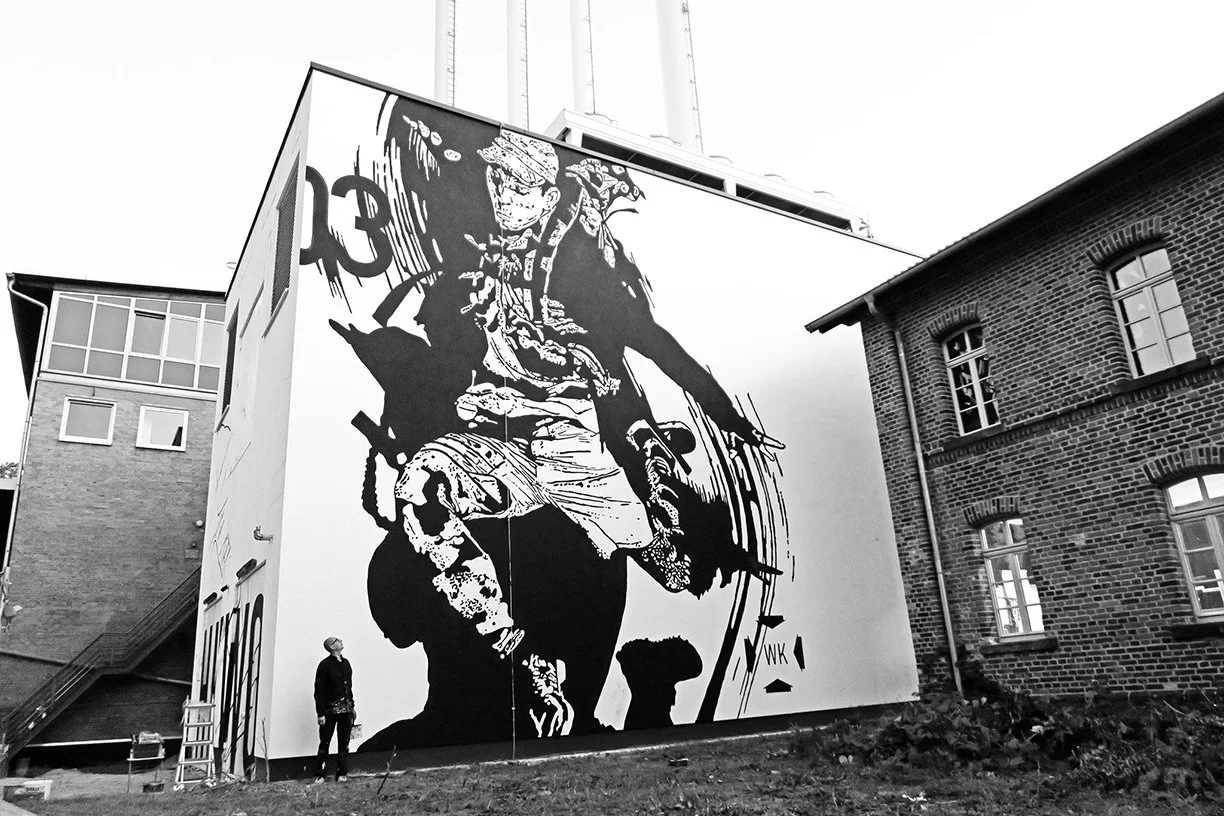
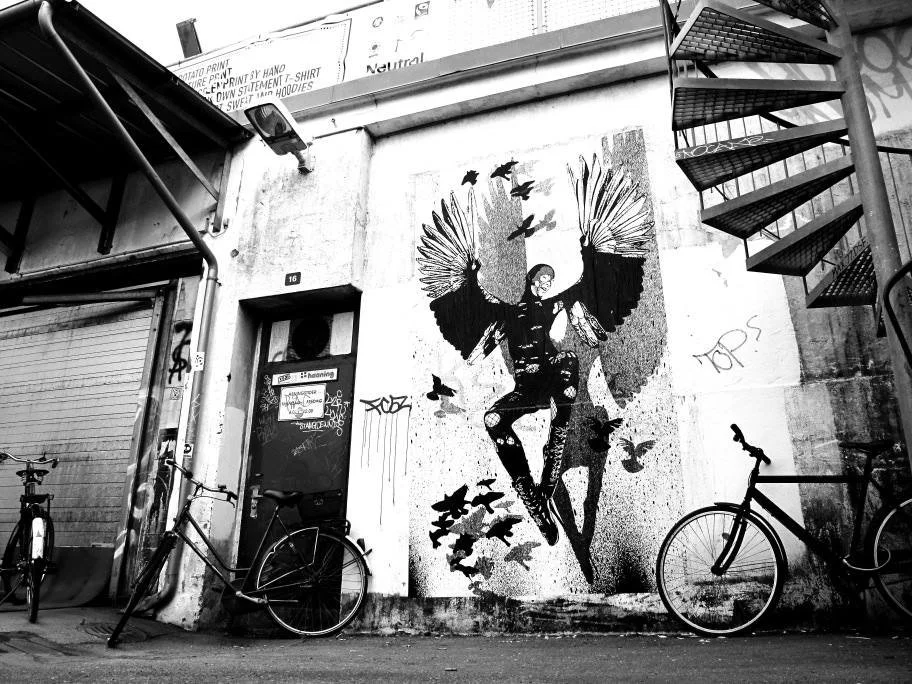
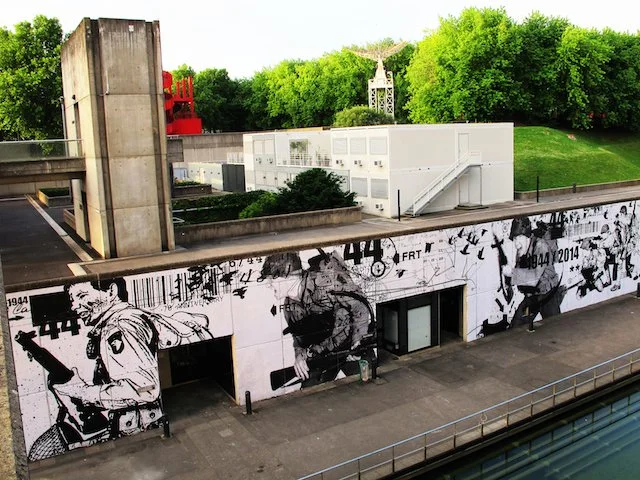
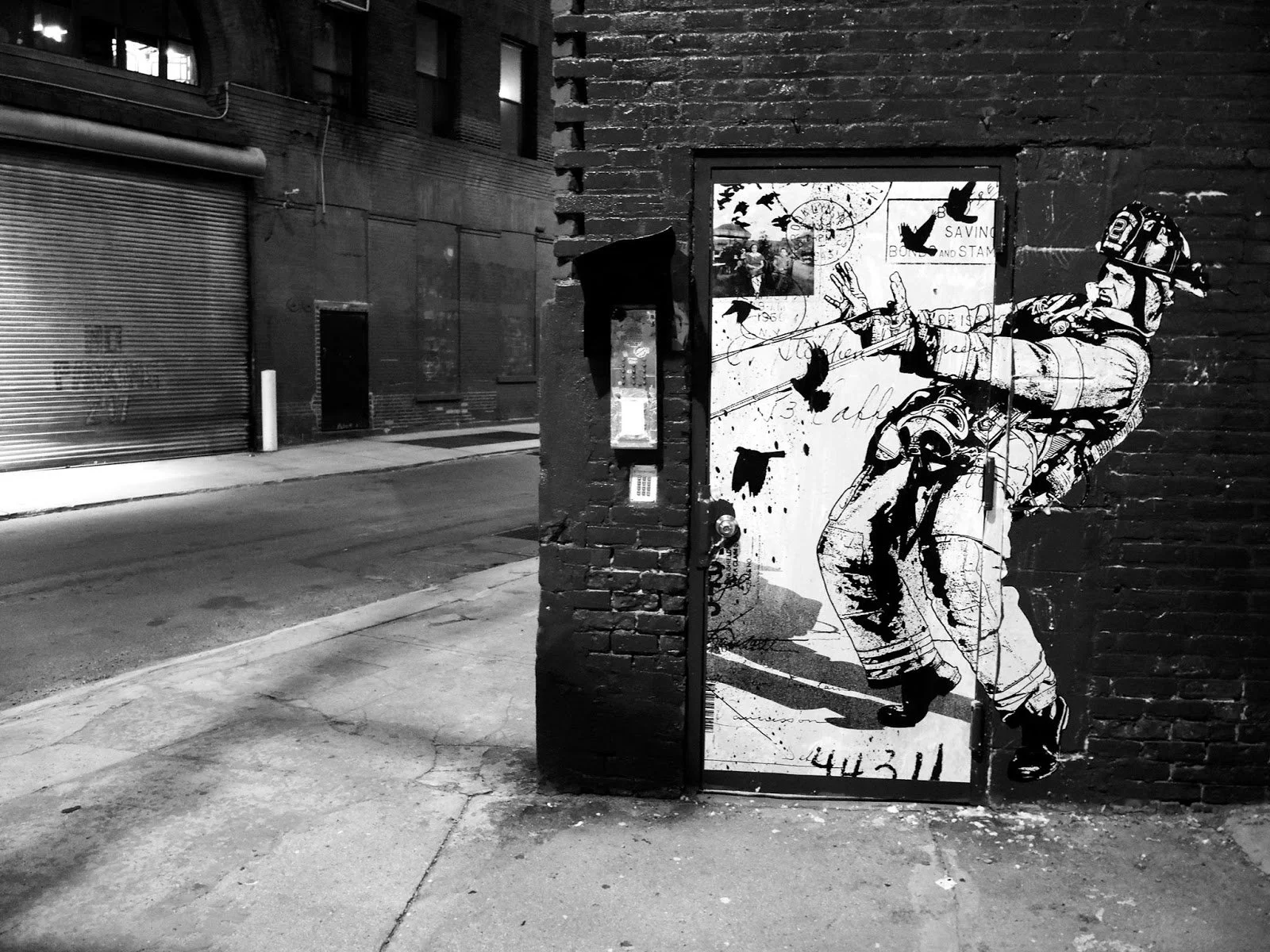
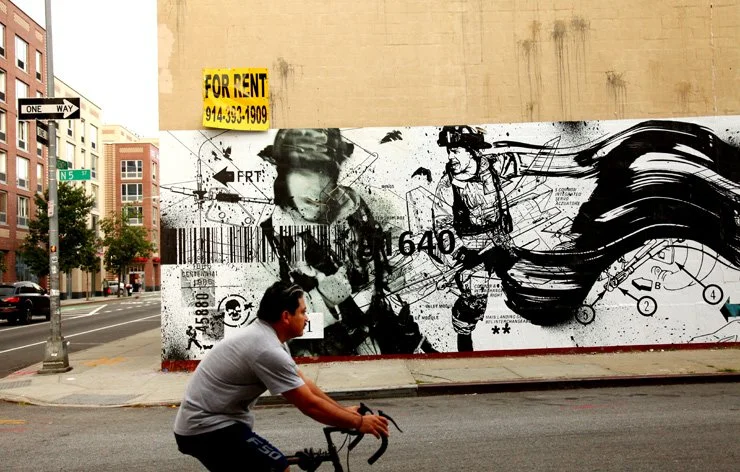
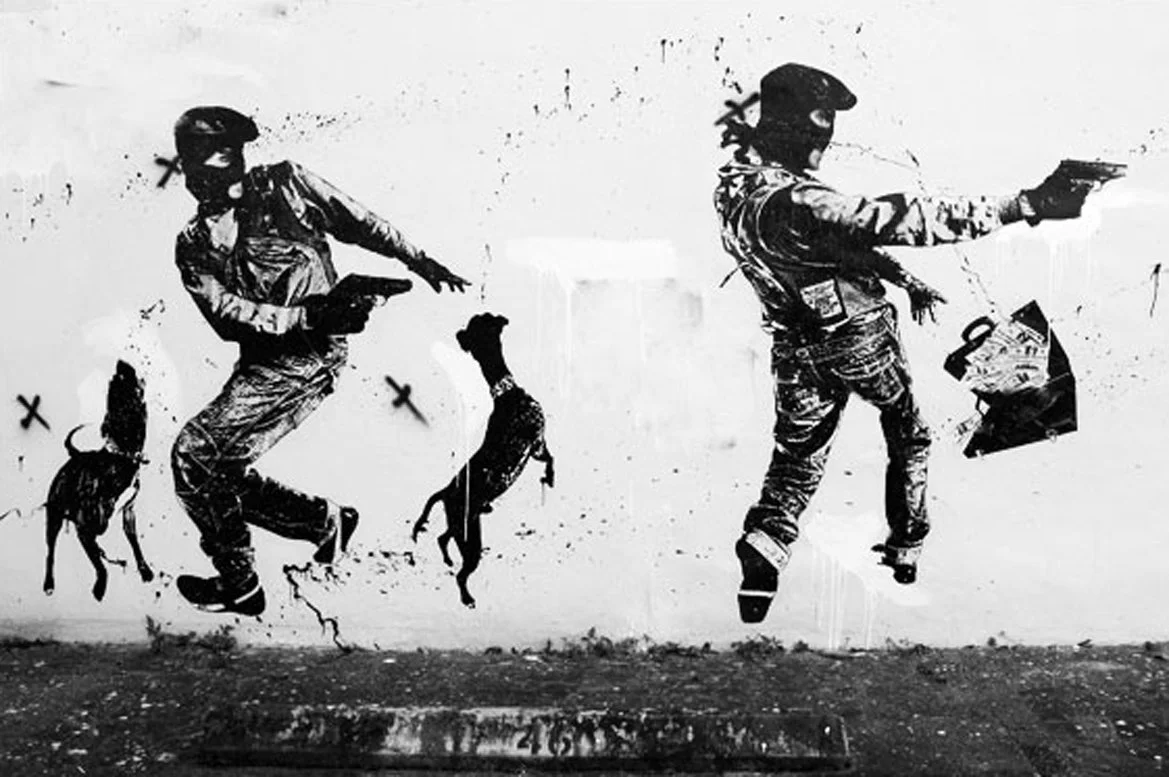
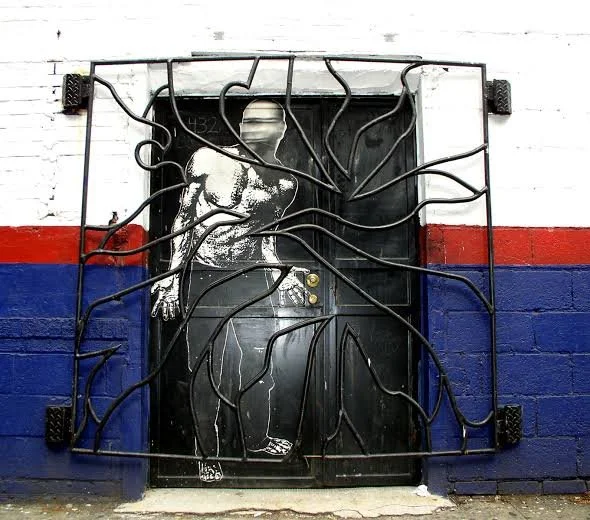
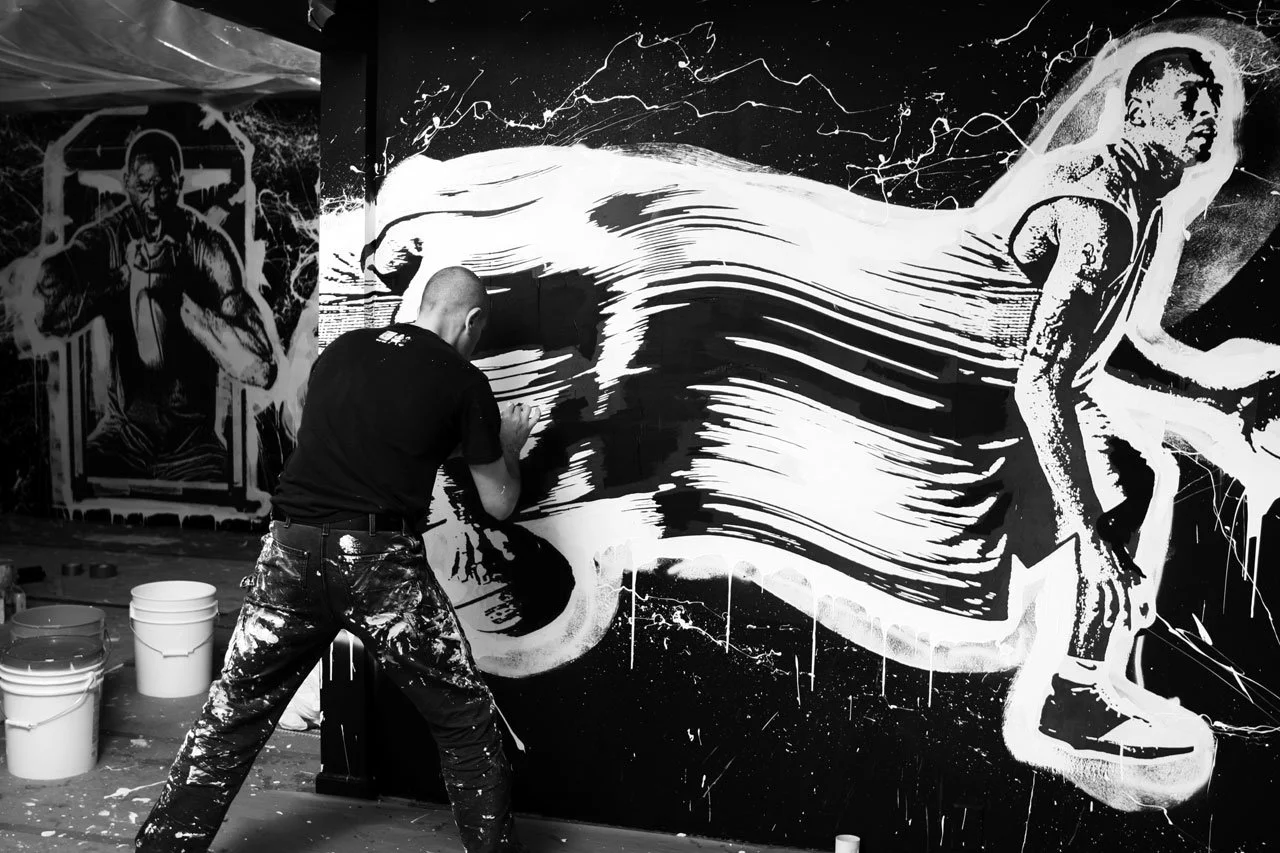
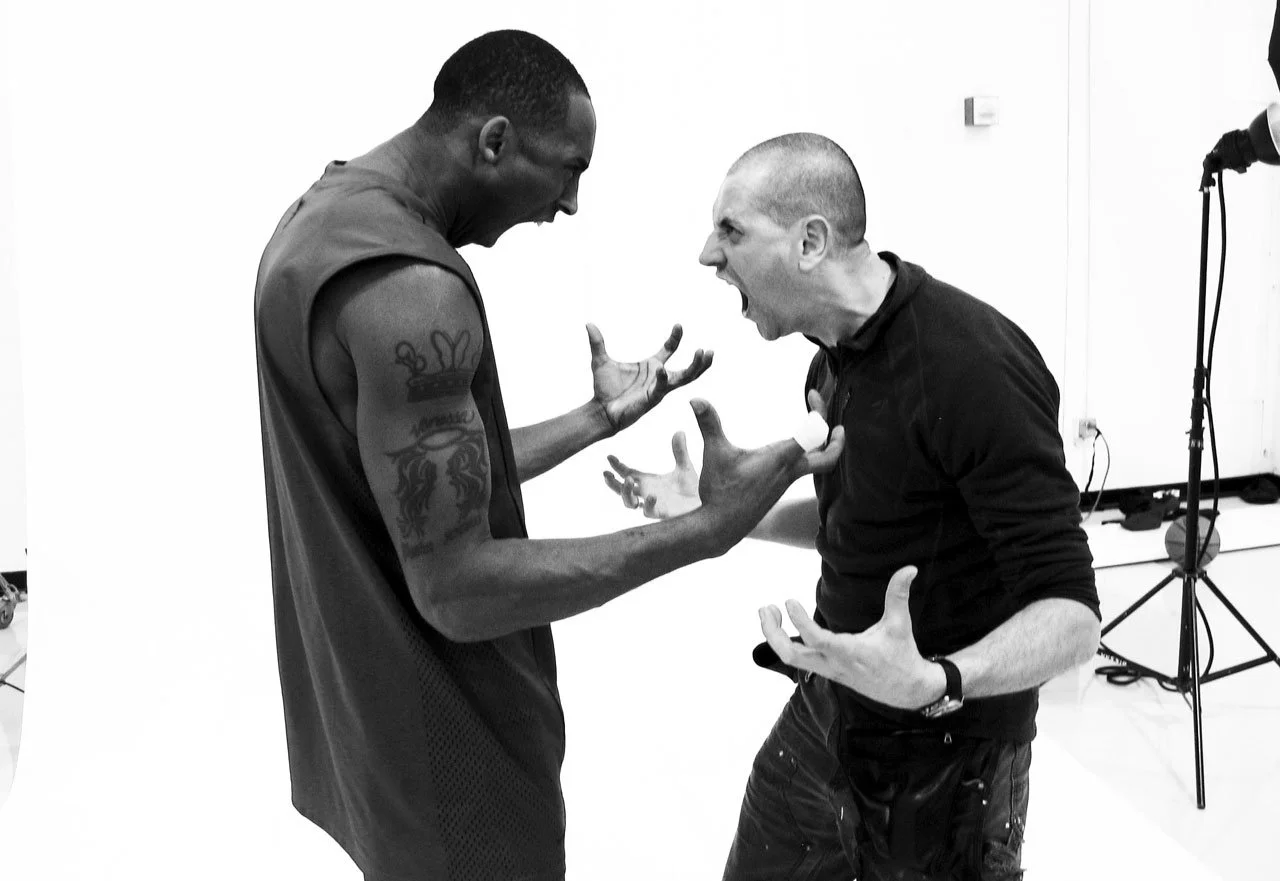
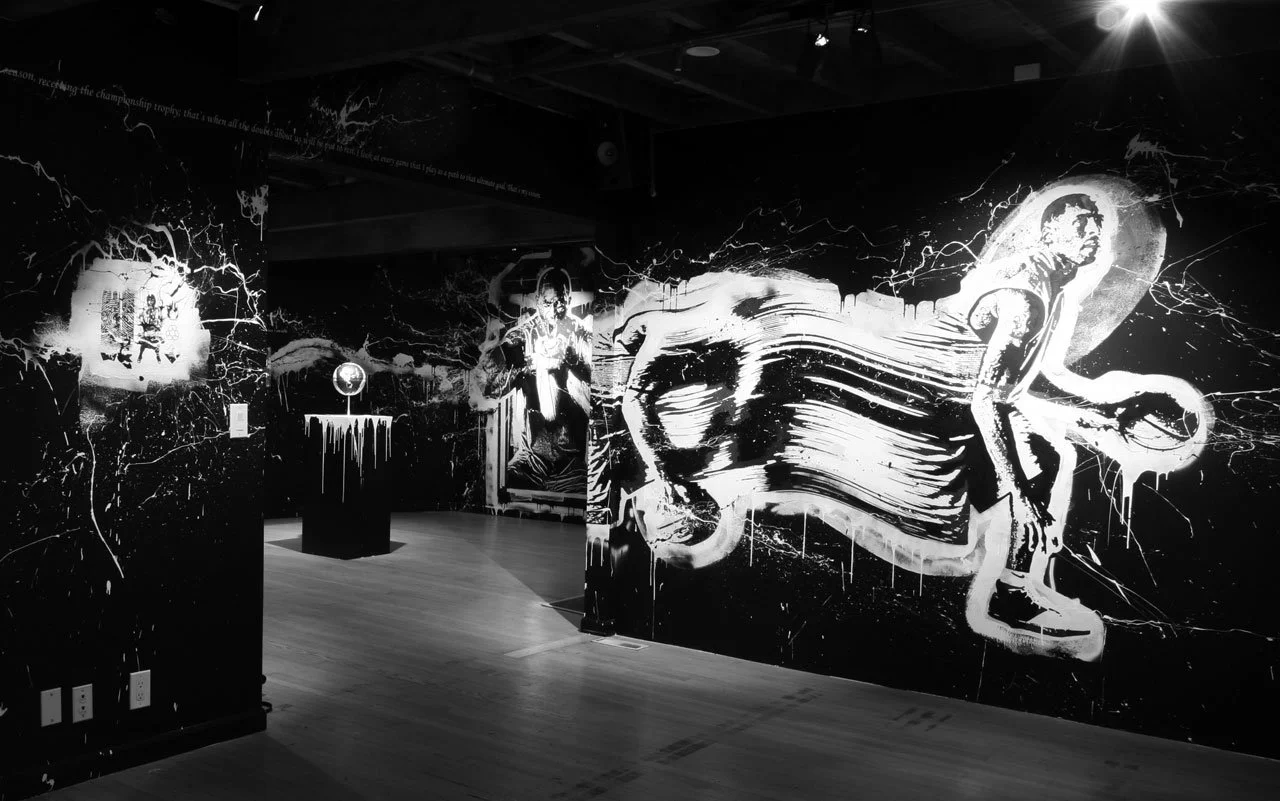
That is also why WK’s language has translated naturally into sport and culture. For Nike’s “Unstoppable” Shanghai campaign, he depicted retired professional runner and Nike Run Club coach Jin Yuan in motion across the city. Earlier, he created a 154-meter London billboard for Adidas featuring boxer Prince Naseem and collaborated with Nike on work featuring Kobe Bryant. The brands may change, but the fit is clear: WK does not illustrate performance. He visualizes its internal pressure.
His practice has also crossed into museums, galleries, fashion and retail. He participated in the 2017 opening of Berlin’s Urban Nation Museum. He joined Shepard Fairey for the Agnès b.-supported East/West Propaganda Project in Tokyo and Paris. His work has occupied Galeries Lafayette, a monumental Henri Bendel window and the Yohji Yamamoto Gallery.
Yet the most successful collaborations do not domesticate the work. They give its energy another surface to attack.
What Initially Drew Me In?
When I first saw WK’s work, I did not think of it as graffiti.
At that age, “art” meant the names we were taught in school— Leonardo da Vinci, Vincent van Gogh, Pablo Picasso— and the paintings protected inside galleries and museums. What I saw at Lafayette and Prince had the ambition, composition and emotional force I associated with those artists. The difference was access.
This art was outdoors. It did not ask me to buy a ticket, understand a movement or know the right vocabulary. It was simply there for anyone who happened to walk past.
That generosity changed me.
WK’s installations taught me to look more carefully at the city. They led me toward Shepard Fairey’s Obey Giant, Keith Haring, REVS and COST, Futura and KAWS. They helped turn a casual encounter into a lifelong interest in urban art.
The irony is that I later entered advertising, a business equally obsessed with stopping people in motion. Most advertising interrupts the city and asks for attention. WK’s best work becomes part of the city and earns it.
Years ago, I connected with WK while hoping to involve him in an idea for one of my advertising clients. The project fell through. I have pitched his work for other opportunities since then and have not yet succeeded. For a long time, I told myself the clients simply did not get it. The more honest explanation is that I did not make them see what I saw.
Perhaps I am still working on that pitch.
The Piece I Would Keep
Over the years, I have collected several WK Interact works, including The Race, NYC 1970 and Gear. Each captures something essential about his vocabulary: propulsion, urban memory, machinery and the human impulse to keep moving.
But my favorite is a personalized portrait of Bob Marley.
It hangs behind my desk in my office and appears in nearly every video conference I join. The placement feels almost too perfect for Walls + Wax: a defining reggae artist interpreted by the urban artist who first taught me to see walls differently.
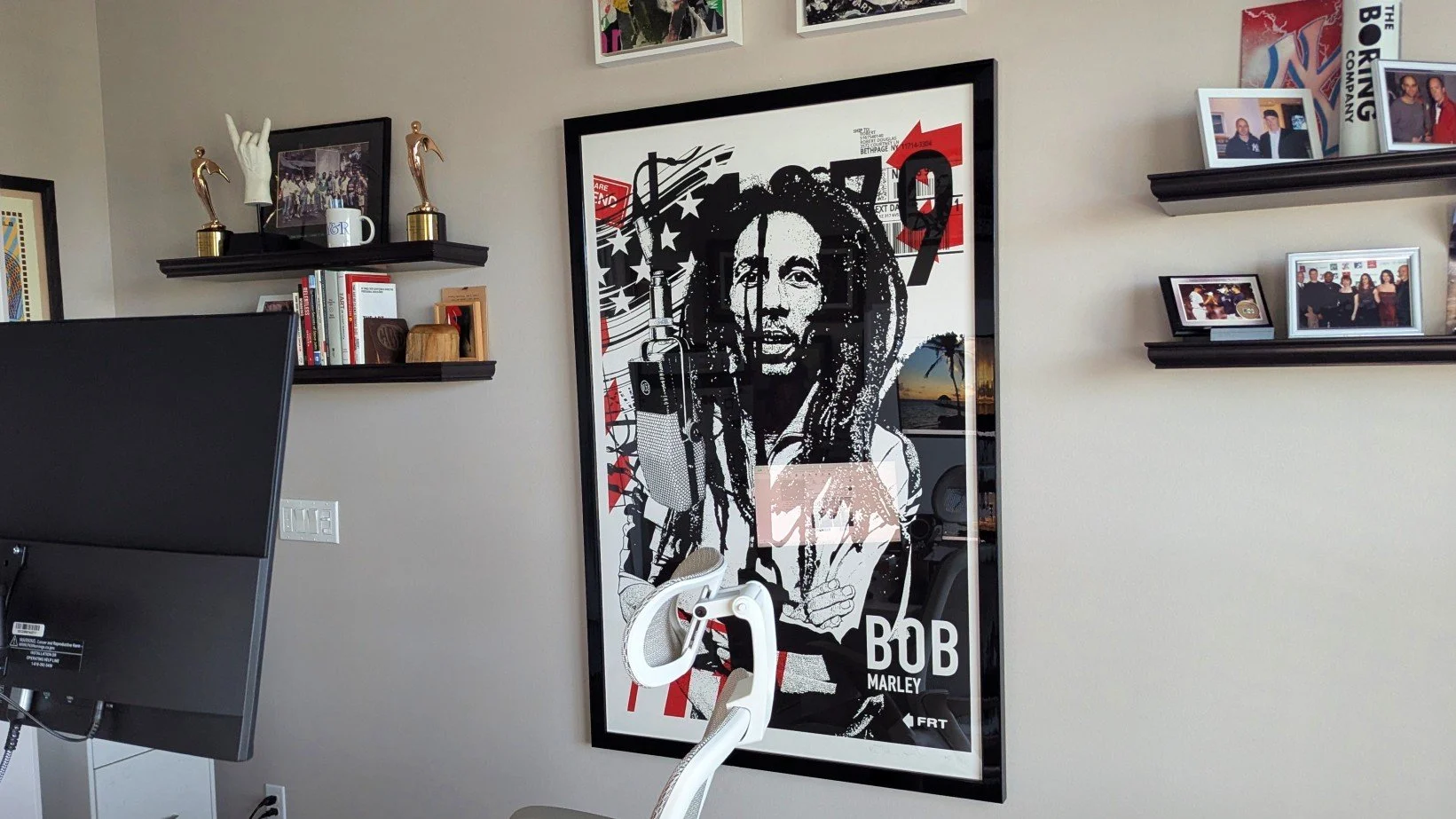
Marley by WK Interact
The portrait also brings WK’s language into a less expected register. Marley is not an athlete charging toward a finish line or a soldier moving through danger. His force is cultural and spiritual. Yet WK finds movement in him—the momentum of a voice, an idea and an influence that continues long after the body is gone.
That is why I would keep it if I could keep only one.
It connects two of my deepest passions. It carries a personal relationship with the artist. And it reminds me that influence is a form of motion too.
Why WK Interact Matters
Pop culture has become very good at absorbing the visual language of artists from the street while leaving many of those artists less recognized than the brands, campaigns and creators their work influences.
Walls + Wax exists, in part, to reverse that flow of attention.
WK Interact matters because his work is immediately identifiable, but recognition is only the beginning. Look closer and you find a complete way of thinking: choose the environment first; respect the architecture; treat limitations as material; turn the public into participants; make the image impossible to separate from the place where it lives.
He did more than place art on New York walls. He used those walls to show what New York felt like.
I first encountered his work without knowing his identity. Decades later, I live with it, collect it and still look for ways to bring it into new spaces. Few artists can claim that kind of arc in another person’s life.
WK made me stop. Then he taught me to keep looking.
And all these years later, his work still refuses to stand still.
Look Closer
Explore WK Interact’s official website, see current work and process on Instagram, and discover more about his museum presence through Urban Nation.
Collector’s question: Which WK Interact work would you want to live with— and what is it about that image that keeps pulling you back?
All images copyright protected by WK Interact.